Showing posts with label Richard III. Show all posts

Sing a Song of Sixpence - A Nursery Rhyme, a King and Queen, and a novel.

Judith Arnopp


Sing a song of sixpence a pocket full of rye,
Four and twenty blackbirds baked in a pie.
When the pie was opened the birds began to sing,
Oh wasn't that a dainty dish to set before the king?
The king was in his counting house counting out his money,
The queen was in the parlour eating bread and honey
The maid was in the garden hanging out the clothes,
When down came a blackbird and pecked off her nose.

There are many theories as to the origins of the nursery rhyme Sing a Song of Sixpence. Some see it as an early lampoon about the extravagances of royalty, some as a representation of Henry VIII, Katherine of Aragon with Anne Boleyn playing the part of the maid. The blackbirds baked in the pie being the disaffected monks after the dissolution of the monasteries.

One account I stumbled across equated it with the pirate Blackbeard as ‘a coded message that evolved over several years and was used by confederates of the notorious pirate Blackbeard to recruit crew members for his prize-hunting expeditions.’
There is much more about Blackbeard here: http://www.snopes.com/lost/sixpence.asp

I tend to prefer the Tudor links to the rhyme for although Sing a Song of Sixpence was first published in the 18th century it certainly has origins in the 16th. Perhaps sixpence was the going rate for a good song during this time. There are references to singing for sixpence in Shakespeare’s Twelfth Night during a drunken conversation between Sir Toby Belch and Sir Andrew.

 “SIR ANDREW: Excellent! Why, this is the best fooling, when all is done. Now, a song.
SIR TOBY BELCH: Come on; there is sixpence for you: let's have a song.” (Twelfth Night, Act II Sc. III)


Elizabeth of York
Of course, no Tudor banquet was complete without minstrels to play the favourite songs. One can easily imagine the king and queen seated with their court at groaning tables, dining on exotic dainties to the strains of fabulous music.

In the Tudor period (and certainly before that) extravagant dishes were created to amaze and enthrall the king. Swans and peacocks were roasted and the feathers then replaced to make it appear the birds were still living. Dishes such as dolphin and porpoise were not unheard of and, with recipes like these, one can imagine the chef’s unenviable task of thinking up new and innovative ideas to tease the royal palate. Song birds were regularly eaten, it is only one step further to serve the dish a little al dente. Why not a pie full of live birds?

It wouldn’t have been so unusual. An Italian cookbook from 1549 contains a recipe ‘to make pies so that birds may be alive in them and flie out when it is cut’. (See note 1)

A description of the wedding of Henry IV of France and Marie de Medici says, ‘The first surprise, though, came shortly before the starter – when the guests sat down, unfolded their napkins and saw songbirds fly out.’ (See note 2)

One version of the rhyme was published in Tom Thumb’s Pretty Song Book in around 1744. Instead of four and twenty black birds it has four and twenty ‘naughty boys’ beneath the crust.    

  Sing a Song of Sixpence,
  A bag full of Rye,
  Four and twenty Naughty Boys,
  Baked in a Pye.

 What else, one wonders, would you do with twenty four disobedient children?

Eating bread and honey
Personally, I was taught as a child that the king and queen concerned were Henry VII and Elizabeth of York. (Incidentally, Elizabeth also graces the playing card and the likeness to her contemporary portraits are quite clear.) Henry Tudor is often depicted as being ‘careful’ with money and so fits quite well within his 'counting house.’ Whether this idea of kingly miserliness originates with the poem or vice versa it is not possible to say. His taxes were unpopular enough for the Cornish to rise in arms against him. (Mind you, that is not at all unusual, people never like to pay tax.) But, miserly or not, his careful control of his finances meant that at his death the royal coffers were full; he would likely have turned in his grave if he’d known how quickly and thoroughly his son, Henry VIII, was to empty them, squandering his father’s riches on war and theatrical gestures.

Elizabeth of York took no part in governing the country; her role was purely a domestic one, concerned with the children and charitable works; so again, the positioning of her in the rhyme eating bread and honey in the parlour is in keeping. 

 In my forthcoming novel A Song of Sixpence Elizabeth is not depicted scoffing bread and honey in the parlour; instead she is battling to come to terms with the loss of the primary male members of her family and preserving her surviving kin from a similar fate. Her marriage to the former enemy Henry VII is difficult and not helped by the appearance of a man claiming to be her brother, Richard of York, thought to have perished in the Tower in 1483. A man that Henry dubs Perkin Warbeck.

In literature Elizabeth is most often  presented as a daughter, wife or mother,. She has become as two dimensional

as the image on the playing card. But she was a real woman, with real emotions, who lived in very turbulent times. I wanted to put some flesh on her bones, some thoughts in her head and give her some of the credit she is due.


And the same for Henry. In both fiction and non-fiction he is either a cold calculating king or a complete monster. In A Song of Sixpence he is painted many shades of grey (no, it isn’t that sort of book). He is by no means an easy husband for Elizabeth for his years of exile have left him with insecurities and a chip on his shoulder that threatens both his marriage and his throne. His reign suffered more uprisings than any other; he can scarcely have enjoyed a quiet moment, but Elizabeth was raised to be dutiful and ultimately proves a good wife, a good queen, and an exemplary mother.

~~~~~~~~~~~~~

A Song of Sixpence: The story of Elizabeth of York and 'Perkin Warbeck.' 

In the years after Bosworth, a small boy is ripped from his rightful place as future king of England and forced to roam the courts of Europe. His sister Elizabeth, now Queen to the invader Henry Tudor, is torn between family loyalty and duty.

As the final struggle between the houses of York and Lancaster is played out, Elizabeth is torn by conflicting loyalty, terror and unexpected love.

Set at the court of Henry VII A Song of Sixpence offers a unique perspective on the early years of Tudor rule. Elizabeth of York, often viewed as a meek and uninspiring queen, emerges as a resilient woman whose strengths lay in endurance rather than resistance.

A Song of Sixpence is available to pre-order for your UK Kindle NOW; if you are in the USA, click here.

You can read more about Judith and her work on her website:  
And purchase her books, both in paperback and on Kindle here.


Illustrations for Wikimedia commons.
http://upload.wikimedia.org/wikipedia/commons/8/8f/Sing_a_sing_of_sixpence_-_illustration_by_Walter_Crane_-_Project_Gutenberg_eText_18344.jpg
http://upload.wikimedia.org/wikipedia/commons/2/22/Elizabeth_of_York_from_Kings_and_Queens_of_England.jpg
http://upload.wikimedia.org/wikipedia/commons/e/e5/Prinsep%2C_The_Queen_was_in_the_Parlour.jpg
http://upload.wikimedia.org/wikipedia/commons/9/92/Four_and_Twenty_Blackbirds.png
http://upload.wikimedia.org/wikipedia/commons/d/df/Queen_of_Hearts_%28Elizabeth_of_York%29.png

Notes 
1: (Giovanni de Roselli's Epulario, quale tratta del modo de cucinare ogni carne, ucelli, pesci... (1549), of which an English translation, Epulario, or the Italian Banquet, was published in 1598 (Mary Augusta Scott, Elizabethan Translations from the Italian no. 256, p. 333f.)

2: (Blow out! History's 10 greatest banquets - Features, Food & Drink - The Independent)

Elizabeth of York - Mother of a Dynasty

by Judith Arnopp

Elizabeth of York
All images rom Wikimedia*
Unlike her son Henry VIII and the granddaughter named in her honour, Elizabeth of York isn’t a household name. When viewed against the back drop of other Tudors she is far less splendid than her children; she is conventional and appears obedient, even cowed perhaps. Her portraits show a pretty, plump, and resigned looking woman who doesn’t adhere to our imagined picture of the mother of a king, the grandmother of a king and two queens. But, although her meek expression belies her harsh experiences she was in fact, the founder of a dynasty.

Elizabeth was born on February 11th 1466 into the bloody era now known as the Wars of the Roses. She was the first child of Edward IV and Elizabeth Woodville. To everyone but the couple involved, this was an unconventional and unpopular match but, unlike other queens, Elizabeth Woodville was to prove satisfactorily fertile.

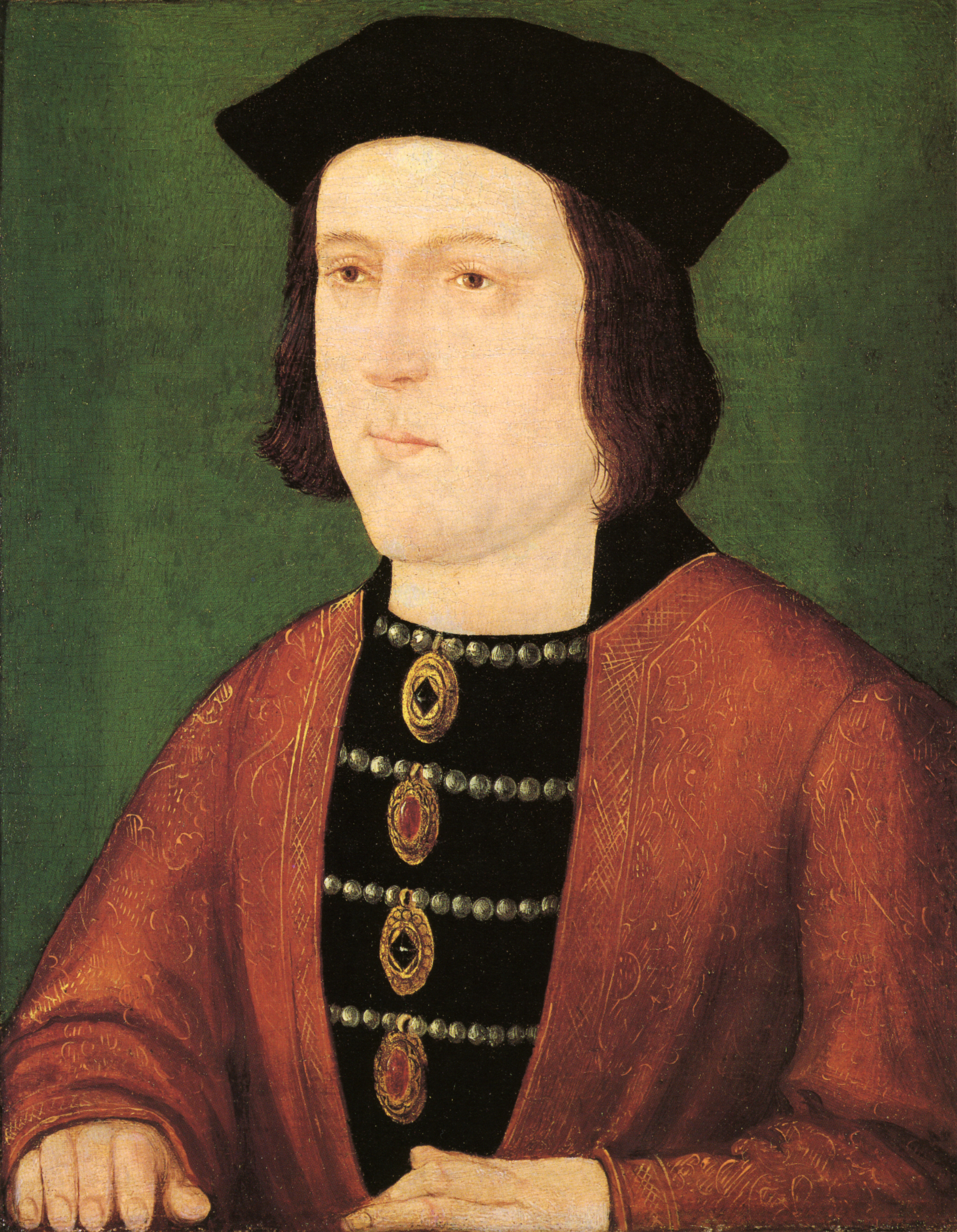
King Edward IV
It was a time of upheaval and when Edward was forced to flee into exile in Burgundy, the Queen, along with her daughters, fled into Sanctuary at Westminster Abbey.  There, safe from conflict but estranged from the exiled King, the first of the younger Elizabeth’s brothers was born. (The boy Edward would later earn his place in history by ‘disappearing’, along with his brother Richard, from the Tower of London, igniting a mystery that continues to burn today.)

Meanwhile, boosted perhaps by the good news, the exiled king gathered his forces and with the aid of his brother-in-law, Charles the Bold of Burgundy, returned to England to resume the battle for his throne, finally defeating Warwick and Margaret of Anjou and having the old King Henry VI murdered in the Tower. This initiated a time of relative peace.

For Elizabeth, now five or six years old, it was time for her education to begin. As well as the skills of running a huge household, she was also taught to read and write and given some instruction in accounting. Contemporary reports describe her as pious, obedient, and loving, and dedicated to helping the poor.

In 1475 when Edward made his peace with France, it was arranged as part of the treaty that on her twelfth birthday she would go to France to prepare for marriage to Dauphin Charles. But, before this could take place, France reneged on the deal and married his son to Margaret of Austria instead.

Elizabeth Woodville
Things ran smoothly for a while, or as smoothly as they ever do in royal circles, until, on the unexpected death of the King in 1483, Elizabeth fled once more with her mother into Sanctuary at Westminster. Richard of Gloucester took his place as Lord Protector and Elizabeth's brother, the Prince of Wales, was brought to London to await his coronation, as was tradition, in the royal apartments at the Tower. 

Shortly afterward it emerged (whether true or not is another question) that Edward IV’s marriage to Elizabeth Woodville was bigamous due to a prior contract of marriage. All children of the union between Edward IV and Elizabeth Woodville were pronounced illegitimate. As we all know, Gloucester was declared King Richard III, and at some point between 1483 and 1485, Elizabeth’s brothers disappeared from the record. (That is not proof however that they disappeared from the Earth – there are any number of possible explanations).

The Princes in the Tower
How must this have been for Elizabeth? One moment she is the Princess of the realm, Dauphine of France, and the next an illegitimate nobody living in exile from court in the squalor of sanctuary.

And what of her brothers' fate? She would have been ignorant of that, and the resulting uncertainty mixed with grief for her father can only have been hard. It is possible that her mother knew or believed the boys to be safe. Why else, after scurrying into the safety of Westminster in fear of her life, would she suddenly hand her daughters into the care of the very man suspected of injuring her sons? 

We cannot know the answer to that, but the uncertainties provide very tasty fodder for the authors of fiction.

Elizabeth and her sisters returned to court to serve Richard’s Queen, Anne Neville, where they were treated with every courtesy. Queen Anne was ailing and clearly dying. It was at this time that rumours emerged of a relationship between Richard and his niece, Elizabeth. It is now impossible to be certain of the truth behind the allegation, but at the time gossip was strong enough for Richard to publicly deny the accusation. Whether the claim was true or not, Elizabeth would have suffered some degree of shame, but she seems to have continued to be prominent at court, serving the Queen until her death in March 1485. 

In August, when invasion was looming, Elizabeth and other children from the royal nursery were sent north for safety while the King dealt with the threat from Henry Tudor.

Henry Tudor
Henry Tudor, the Lancastrian heir, was aided throughout his exile by his mother, Margaret Beaufort in England. Margaret had devoted her life to her son’s cause. She  untiringly devised methods to secure the throne she saw as rightfully her son’s. Prior to his invasion, in order to muster support from the Yorkist faction, Henry promised that, if he became king, he would marry Elizabeth of York and unite the warring houses of York and Lancaster, putting an end to the Wars of the Roses forever.

After Richard III’s defeat at Bosworth in 1485 Elizabeth was taken to Margaret Beaufort’s house at Coldharbour, but Henry was slow to marry her and slower to crown her. We should consider the logistics of arranging a royal wedding at short notice, but it not something that Henry VIII found an obstacle in the next reign. To some it is almost as if he wished to deny that Elizabeth had any influence on his claim at all. They were married in January 1486. Elizabeth gave birth to their first child, a son whom they named Arthur, in September of the same year scarcely nine months later. She had no further children until two years after her coronation which took place in November 1487.

Perkin Warbeck
Henry Tudor’s reign was fraught with rebellion. Pretenders emerged throughout, some were swiftly dealt with, but one in particular, Perkin Warbeck, claiming to be Elizabeth’s younger brother, Richard, harried the king for years. We will never know his real identity, although the King went to great lengths to provide him with a lowly one.

Elizabeth is always described as a dutiful wife and devoted mother. She took no part in ruling the country, and there are no reports of her ever having spoken out of turn or ‘disappointing’ the King. Henry appears to have been a faithful husband; his later relationship with Katherine Gordon, wife of Warbeck, was possibly no more than friendship, but Katherine did very well, both in status and financially, at Henry's court.

Although Prince Arthur was raised, as convention dictated, in his own vast household at Ludlow, Elizabeth took an active role in the upbringing of her younger children, teaching them their letters and overseeing their education.

Prince Arthur
When Arthur, the Prince of Wales, died suddenly in 1502, both Henry and Elizabeth were distraught, the King thrown into insecurity at having been left with just one male heir. Reports state that the King and Queen comforted each other and, although there are some hints of a possible estrangement between the royal couple, Elizabeth promised to give Henry another son. She fell pregnant quickly and, ten months later, gave birth to a girl, Katherine, but succumbed to puerperal fever and died on her birthday, 11th February 1503.

Elizabeth of York
Elizabeth deserves more credit. There is as much strength in resilience as in resistance, and I believe she was both strong and resolved, bound by duty to serve her country as best she could.

Her union with Henry negated the battle between York and Lancaster, and the many children she bore strengthened political unions with France, Scotland, and Spain. Ultimately, she died doing her duty to England.

When a king puts aside personal desire for the sake of his country or dies on the battlefield defending it, he becomes a hero; often, if he is on the right side, he is honoured throughout history.

Yet Elizabeth did all those things. She married dutifully; she quickly produced an heir, a spare, and several daughters to increase the king’s bargaining powers. At the tragic loss of the Prince of Wales, despite her age and the suggestion of medical problems, she took the most dangerous decision to try to give the King another son. She died a hero, in service of her King and country.

Images:
*http://upload.wikimedia.org/wikipedia/commons/9/95/Elizabeth_of_York_from_Kings_and_Queens_of_England.png
http://upload.wikimedia.org/wikipedia/commons/4/48/King_Edward_IV.jpg
http://upload.wikimedia.org/wikipedia/commons/2/2f/Elizabeth_woodville.jpg
http://upload.wikimedia.org/wikipedia/commons/c/c0/Princes.jpg
http://upload.wikimedia.org/wikipedia/commons/2/2a/Henry_Tudor_of_England_cropped.jpg
http://upload.wikimedia.org/wikipedia/commons/3/3c/Perkin_Warbeck.jpg
http://upload.wikimedia.org/wikipedia/commons/6/69/Anglo-Flemish_School%2C_Arthur%2C_Prince_of_Wales_%28Granard_portrait%29_-004.jpg
http://upload.wikimedia.org/wikipedia/commons/c/c6/Elizabeth_of_York%2C_right_facing_portrait.jpg

~~~~~~~~~~~~~

Elizabeth is the subject of my shortly to be published book A Song of Sixpence, in which I suppose that the younger of the princes was in fact rescued from the Tower in 1483 and re-emerges some years later as the man Henry names 'Perkin Warbeck'. 

The novel considers the division of loyalties a princess, born to the house of York, might have suffered in her union with the House of Lancaster. Would her support be for husband and her sons, or her long lost brother?

This is a massive issue to deal with in one blog, and I would encourage you to read more about Elizabeth in Alison Weir's book Elizabeth of York: The First Tudor Queen and Amy Licence's Elizabeth of York. 


For more information about my work please visit my webpage. 
Follow my blog.
Or find me on Facebook and Twitter.
My Amazon page is here if you are in the UK
or here if you are in the USA


Who Was the Real Charles Brandon?

By Nancy Bilyeau

English Princess Mary Tudor
Erasmus said of Mary Tudor, "nature never formed anything more beautiful." The pampered and adored younger sister of Henry VIII was married at 19 to Louis XII, king of France. After the princess arrived in Paris with her dowry of 400,000 crowns and hundreds of attendants, the French, disposed to find her a disappointment, admitted that she was, indeed, a "nymph from heaven."

King Louis, 52, crippled with gout, died less than three months after the wedding but not before showering his teenage wife with jewels, including "the Mirror of Naples," a diamond pendant with a pearl "the size of a pigeon's egg." Everyone expected the widow of the French king to make another spectacular royal marriage.

Instead, while still in France, she secretly took as her second husband a 31-year-old Englishman, Charles Brandon, the newly elevated Duke of Suffolk, celebrated for his good looks, military valor and jousting skill. Before she sailed for France, Mary had told her brother she would only agree to wed the old French king if she could choose her second husband herself. Desperate for the diplomatic alliance, Henry VIII had agreed. But Mary feared that if she returned to England, her brother would force her into another arranged marriage. She persuaded Brandon, whom she had known for years and had probably fallen in love with in England before her marriage, to marry her.  They had no permission to do so and were in disgrace, with Brandon facing arrest, until Henry VIII forgave them. Charles Brandon was, after all, his best friend.

It was a highly romantic episode, inspiring a stream of novels over the centuries, most significantly When Knighthood Was in Flower in 1898, which sold so many copies it inspired a burst of similar historical novels and no less than three films, including one in 1922 financed by William Randolph Hearst and starring Hearst's mistress, Marion Davies.


Mary Tudor and her new husband, Charles Brandon


A booted Marion Davies in When Knighthood Was in Flower


"Margaret" Tudor (Gabrielle Anwar) and Charles Brandon (Henry Cavill) in the miniseries "The Tudors"

But the real Charles Brandon, while an impressive and charismatic man to his contemporaries, is not a one-dimensional figure of handsome chivalry. His record with women was notorious. He'd already been married twice when he wed Mary Tudor--one of the wives still alive and fighting the annulment --and had contracted to wed yet a third, a child heiress whose family title he was using. A year and a half before he married Mary, ambassadors gossiped that he was trying to seduce Margaret of Austria, Regent of the Netherlands and daughter of the Holy Roman Emperor. The root of his behavior was not womanizing--or at least not only womanizing--but a willingness to use women as a means of gaining fortune and, if possible, fame, a common policy in the Tudor and Stuart age. He had a powerful sexual appeal, and he monetized it.

Like many real people of Henry VIII's court, Brandon is made up of both light and shadow. He is a product of the man-on-the-make spirit of the early Tudor age, which itself was made possible by the violent chaos of the death of Plantagenet rule.

His life is buried in myth, and the first is that of favored royal ward, orphaned by the Battle of Bosworth when his father, Sir William Brandon, a heroic man of "pure Lancastrian heritage" bearing the standard of Henry Tudor, was personally slain by Richard III. Which is not true in every respect.

The Brandons were an old, respectable country family. They lived in a small West Suffolk town, drawing income from farms and cattle for at least three centuries. A Geoffrey Brandon, succeeding in trade in Norwich, sent his son, William, to London in the last half of the 15th century. Says one historian: "He was a pushing, shrewd, energetic and very unscrupulous knave, who soon acquired great influence in the city and amassed corresponding wealth. Finally he became sheriff and was knighted by Henry VI." Yet when Henry VI was no longer king, replaced by the Yorkist Edward IV, Sir William Brandon switched to that side, and he lent Edward IV "considerable sums of money."

Which Edward IV declined to pay back.

Ordinarily a rich man would have had no recourse to a King's reneging. But when King Edward died, and his brother Richard III displaced his nephews and took the throne, an opportunity arose for another switching sides. Henry Tudor, in exile in Brittany, was now the leader of the Lancastrians. Brandon threw his support to Tudor. Two of his sons, William and Thomas, joined the Duke of Buckingham's rebellion against Richard III and when it failed, they fled England to join Tudor's cause. William was married to a young widow with some money named Elizabeth Bruyn. In 1484, she gave birth to Charles, the future Duke of Suffolk, in either England or France, and died shortly after.

But before we travel to the heroics of Bosworth, a terrible fact must be disclosed about the young William Brandon, knighted by Henry Tudor before they invaded England. He was, by one historical document, a rapist. In 1478 he was "in ward" for raping an "old gentlewoman" and her daughter, according to Paston. One chronicler of the time thought he would hang for it, but for unknown reasons he went free. The veracity of this record is debated today.

Early 19th century depiction of the Battle of Bosworth

It was a period of sexual brutality. Edward IV tried to assault a beautiful young woman named Elizabeth Woodville but she turned a knife on her own throat, threatening to kill herself. Somehow this made the right kind of impression, and she became his wife and queen. He had countless mistresses, passing them to his courtiers when he tired of them, often against their will.

But even within this context, standard bearer was a great honor, and William Brandon was a strange choice for it. He was not a close friend of Henry Tudor's, he lacked a distinguished battle record and he was no noble. Probably Tudor, who left England for foreign exile in 1471, did not know about the rapes. One theory is William Brandon was chosen to carry the standard and stand at the side of Tudor because he was tall and strong. Nonetheless, Richard III is said to have "cleaved" his skull in his desperate charge on Tudor. Brandon's death was the most notable loss on Tudor's side.

After Bosworth, the baby Charles Brandon was an orphan. But the romantic tradition that a grateful King raised the boy with his son Henry, sharing lessons, is simply not correct. There is no record of him living with the royal children. And Charles was seven years older than Henry (and two years older than Arthur). As an adult, he was obviously intelligent but knew scant French and exhibited no interest in scholarship; he lacked Henry VIII's knowledge of languages, history, theology, and literature. Instead, Charles Brandon seems to have spent his childhood in the care of his grandfather and uncles, possibly in the country. His later letters, the "worst spelled and written of his day," were "phonetically spelled, proved him to have spoken with a broad Suffolk accent."

When Charles' grandfather died, the family fortune passed to the oldest surviving uncle, Richard. Little Charles had nothing.

Thomas Brandon is an underappreciated force in the life of Charles. He was an ambitious man of ability who managed to advance himself in the court of Henry VII, and he pulled his young nephew Charles along as best he could. After he became Master of Horse, he found a place for Charles in Arthur's household: he was a sewer, or waiter. A far from cry from the legendary status of chosen playmate to princes.

How then did Charles Brandon rise so high from such inauspicious beginnings, sewer to duke? Like Thomas Cromwell, he used his personal gifts and worked extremely hard. Cromwell was a brilliant lawyer. Brandon was an outstanding athlete, the best jouster in a highly competitive group of men fighting for the attention of first Prince, then King Henry. At the age of 17, he appeared in the lists honoring Arthur's wedding to Catherine of Aragon, and was noticed by all for his prowess when he rode in a tournament held in honor of Philip of Austria and his wife, Joanna of Castile, in 1506. At this time young Brandon was serving as Master of Horse for the Earl of Essex. That household is where he lived; he did not have lodgings at the royal court.

This is the time when he began his marital misadventures. He seduced Anne Brown, a gentlewoman of good family serving Queen Elizabeth, and according to her family, promised to marry her. She was pregnant by him in 1506. But then Brandon jilted her for her wealthy widowed aunt, Dame Margaret Mortimer, old enough to be his mother. They married and, once he got his hands on her property, he sold it all and kept the cash. An appalled Venetian ambassador wrote, "In this country, young men marry old ladies for their money."

In 1507, 23-year-old Charles Brandon had the brief marriage annulled and returned to Anne Brown, whom he married. They had two daughters before she died in 1511.

Mary Brandon, by Holbein. She was one of the daughters from his first marriage.

 Lady Mortimer bitterly opposed the annulment, and became a thorn in Brandon's side for 20 years, until he managed to get the pope himself to support the annulment in 1527. The mess of his early marriages was to haunt not just Brandon but his descendants. Elizabeth I was supposed to have examined the legal documents of the Mortimer annulment to find a way to discredit Brandon's granddaughter, Catherine Grey, who many considered next in line to the throne but who Elizabeth loathed.

After Henry VIII succeeded, Brandon rose higher and higher in his estimation, based mostly on his tournament prowess. He took over his uncle's position of Master of Horse. When England went to war with France, Brandon served with great bravery and distinction. Throughout his long life, he was to serve Henry VIII on the battlefield time and again. "He is like a second king," an awestruck advisor wrote Margaret of Austria.

Margaret of Austria

Back in England, Brandon was soon up to his old tricks. He signed a contract to marry his 10-year-old ward, Elizabeth Grey, a wealthy heiress, and was known as Lord Lisle, her family's title, until his best friend, King Henry VIII, made him Duke of Suffolk. "From a stableboy into a nobleman," commented Erasmus skeptically. He was one of only three dukes in England.

Brandon was still contracted to his ward when he flirted with Margaret of Austria, pretending to steal her ring while Henry VIII laughed in encouragement. There were rumors that she would marry him, until her father, the Holy Roman Emperor, grew furious. She backed away quickly.

Young Henry VIII


A 19th century historian wrote of Henry VIII and Charles Brandon:
"The two men were of the same towering height but Charles was, perhaps, the more powerful... both were exceedingly fair and had the same golden curly hair, the same steel gray eyes planted on either side of an aquiline nose.... owing to the brilliance of their complexions, they were universally considered extremely handsome."

This was the man Princess Mary fell in love with at the same time her brother was arranging her marriage to the King of France. There is no hint of impropriety between them at the English court; she was scrupulously chaperoned. Brandon did not escort her to France. So why did Henry VIII send his friend, infamous for his treatment of women, to escort a vulnerable Mary back to England after King Louis died? He is supposed to have made Brandon promise not to marry her in France. Brandon was always a loyal friend to Henry VIII...yet he did marry her. The French royal jewels that the couple smuggled out of the country and gave to Henry VIII--including the Mirror of Naples--mollified him.

Did Mary Tudor find happiness with the husband she chose for herself, who she risked her brother's wrath to marry? Was this a man who, despite his irresistible good looks and athletic prowess, could be a good husband, even in the 16th century? Perhaps. That is another question entirely, fit for another blog post.

---------------------------------------------------------------------------------

Nancy Bilyeau is the author of a trilogy of novels set in the court of Henry VIII, published by Simon and Schuster. The main character, Joanna Stafford, is a Dominican novice. The Tapestry, the third in the trilogy, will be published March 2015. To learn more, go to www.nancybilyeau.com

Older Post ►
 

Copyright 2011 English History Fiction is proudly powered by blogger.com