Showing posts with label Medieval. Show all posts

The Medieval Romances of Chrétien de Troyes

By E.M. Powell

The Accolade
Edmund Blair Leighton, 1901
Public Domain
If I were to ask you if you knew the story of Sir Lancelot, then I suspect you would answer in the affirmative. Chain mail. One of King Arthur’s knights. Caused all sorts of bother with Guinevere. Yes, you know all about him. But if I were to ask you who Chrétien de Troyes was, you might not have such a ready answer. It might surprise you to know that he is the medieval writer credited with bringing the legend of said Sir Lancelot along with the other Arthurian legends into the genre known as romance. And of course, writing about a British king, Chrétien was French.

It is frustrating that we know very little of Chrétien’s life. He was writing between 1160 and 1172, and it is suggested that he had a position as herald-at-arms at the court of his patroness in the city of Troyes. His patroness was the Countess Marie de Champagne, daughter of Louis VII and Eleanor of Aquitaine. Familiar to us all will be the notion of Courtly Love: this was also a concept running through Chrétien’s work.

Marie played a major part in taking this romantic ideal and promoting it as fashionable behaviour. Devotion and courtesy featured, but so did adulterous love. It should be remembered that adultery was considered amongst the gravest of sins by the medieval church. But Marie’s influence, and perhaps that of her mother, created a surge of interest amongst European aristocracy. (One commentator describes her as ‘this celebrated feudal dame’, a description which, to my eternal regret, conjured up a medieval Mae West on first reading.)

The End of the Song
Edmund Blair Leighton, 1902
Public Domain

Chrétien wrote in Old French, rather than Latin. He composed at least five romances and two lyric poems. The word ‘romance’ also comes to us from this period. The Old French word romanz was first used in a literary sense to distinguish words written in vernacular French (romanz) from those in Latin.

So how did Chrétien happen on tales of King Arthur for inspiration? It would seem that Chrétien, like all good writers of historical fiction, liked a bit of a borrow from the past. Irish, Welsh and Breton legends have some mentions. Geoffrey of Monmouth’s Historia regum Britanniae, written in 1137, introduced the Arthurian legend to continental Europe.  This was a Latin history written in prose. Anglo-Norman poet Wace produced Roman de Brut in 1155, a version of the history now in French couplets.

King Arthur & the Knights of the Round Table
Michael Gantelet, 1472
Public Domain

Wace’s King Arthur and his knights of the Round Table (Wace’s is the first known mention of the Round Table; Chrétien has that for Camelot) were undoubtedly a more refined bunch than those written of previously. But they were still a group of fighters, rather than lovers. If his version were a historical novel, it would have swords and sandals on the cover, no question. It would take Chrétien to bring on the cover with the headless lady in the big dress.

In Chrétien’s romances we have knights riding out on adventures, fighting bravely against other warriors, monsters and magical creatures. And of course, the knights are also in pursuit of the love of their fair lady, often a love they lose, only to fight to get it back again. This latter storyline might be familiar to readers of the contemporary romance genre. But forget stereotypical images of swooning ladies.  Chrétien doesn’t hold with damsels in distress. His ladies can be just as courageous and daring as his knights. When one considers the powerful woman that was one of Chrétien’s patrons, along with other powerful female patrons, this is hardly surprising.

God Speed!
Edmund Blair Leighton, 1900
Public Domain

So what of the romances? First is Erec et Enide, with its straightforward tale of love, estrangement and reconciliation on an adventure-filled journey. It is set in Brittany and depicts King Arthur sitting on a throne emblazoned with a leopard. Such court scenes may have been inspired by Henry II’s  Christmas 1169  court at Nantes in Brittany.

Second is Cligès, which is written against the background of the Tristan and Iseut story. It is an adulterous tale in which Cligès falls in love with Fenice, his uncle’s wife. She feigns her death with a magic potion, so they can be together.

Third up is Lancelot, or The Knight with the Cart. By far the most famous romance of Chrétien’s, it is the first tale of the adulterous love between Lancelot and Queen Guinevere. Though she is cruel to him, he obeys her every command and wish. Readers may not be familiar with its name, The Knight with the Cart. It is so called because in his search for Guinevere, Lancelot rides in a cart meant for convicted criminals. He is concerned for his honour (albeit briefly), but she is very displeased that he would hesitate in his search for her.

The Parting of Sir Lancelot & Guinevere, 1874
Julie Margaret Cameron
Public Domain

Fourth is Perceval, a very lengthy yet not completed tale. Again, it introduces a story which has inspired so many, many more tales of searches and quests: the quest for the Grail.

Last, but by no means least, we have Yvain, or The Knight with the Lion. It is a spectacular romance and adventure, with a lion, a giant, a magic fountain and the widow who falls in love with Yvain, her husband’s killer.

In Time of Peril
Edmund Blair Leighton, 1903
Public Domain

Lancelot and Guinevere. The Grail. King Arthur. Camelot. Chivalrous knights. All part of the popular cultural imagination, thanks to Chrétien de Troyes. We may not know much about him. But my goodness: we know about his stories. We are still retelling them today.

References:
De Troyes, Chretien: Arthurian Romances, Penguin Classics (1991)
Encyclopaedia Brittanica: Chrétien de Troyes
Jones, Terry & Eriera, Alan: Medieval Lives, BBC Books (2004)
Lindahl, C., McNamara, J & Lindow, J. (eds.): Medieval Folklore, Oxford University Press (2002)
Norton Anthology of English Literature: Chrétien de Troyes: www.norton.com
Weir, Alison: Eleanor of Aquitaine: By the Wrath of God, Queen of England, Vintage Books (2007)

~~~~~~~~~~~~~

E.M. Powell is the author of medieval thrillers The Fifth Knight and The Blood of the Fifth Knight which have been #1 Amazon bestsellers in the US, the UK and Australia. Find out more at www.empowell.com.

Amazon.com
Amazon.co.uk
Barnes & Noble
Walmart

Medieval Medley

by E.M. Powell

At the last Historical Novel Society Conference in London in September 2014, there was a highly entertaining panel on the theme My Era is Better than Yours. (if you want to enjoy it for yourself, here's the You Tube link.) Historical fiction writers represented a number of historical periods, arguing whose should be the favourite. The choice was put to audience vote, and the Georgians won. (Note: this might be simply because HNS delegates have a keen interest in gin and syphilis. We may never know for certain). The medieval period of course got my vote. It isn't the most popular for readers of historical fiction, but I think people are missing out. I believe it to be one of the most exciting, extraordinary and at times downright bizarre periods there is. So if you’re not yet a fan, let me give you a flavour in my Medieval Medley. You may change your mind!

Medieval Mail


© 2014 E.M. Powell 

Chain mail-wearing knights often get bad press among the reading public. I am personally a very big fan. There may be some eye-rolling at this as appealing dress from male readers who are possibly envisaging a wimpy Sir Lancelot type. Gentlemen, a suit of chain mail and padded armour weighs in at four stone, or fifty-six pounds. You develop a lot of core strength simply wearing it. Wimpy? I don’t think so.

Medieval Métier

There are jobs in medieval times that could never be described as pleasant but are a novelist’s gift. Many people will have heard of barber surgeons, the early doctors who consulted astrological charts and administered leeches to their patients. The job of leech collector is rarely mentioned. These unlucky folk simply waded bare-legged into reed-filled ponds inhabited by the slimy creatures and let the little suckers latch onto their legs. After the initial nipping bite, the leeches would do their work, swelling to five times their size after about twenty minutes. Bearing in mid the barber surgeons required large quantities of leeches, the job of leech collector must have been utterly foul. It would have been day in, day out, with the multiple bites often turning infected.

Public domain

Medieval Meal

There’s nothing like a medieval banquet for show-off food. When Catherine de Valois, wife of Henry V, was crowned in 1421, the feast was held during Lent and so could contain no meat. Yes, it had eels, salmon, trout, huge crabs and whelks. I can tell you’re unimpressed. But it also had ‘subtleties’: non-edible dishes that introduced each course. This feast included pelicans, panthers and a man riding on a tiger. Eat your heart out, Gordon Ramsey.

Public domain

Medieval Manor

The lords of the manor knew how to keep themselves in luxury. And they used colour to great effect when decorating their homes. The reconstruction of Edward I's bedchamber in the Medieval Palace at the Tower of London gives us such a wonderful example of this. It's decorated as it would looked when he stayed there in 1294.

© 2014 E.M. Powell 

Medieval Monasteries

The medieval period in England saw the construction of hundreds of magnificent monasteries, priories, abbeys and convents. So many were destroyed by Henry VIII's dissolution but even the ruins are still breathtaking. There aren't many words needed to win this argument. This picture of the ruins of  the 12th century Bolton Abbey say it all.

© 2014 Paul Fogarty - Private Collection
Used with permission

Medieval Madness

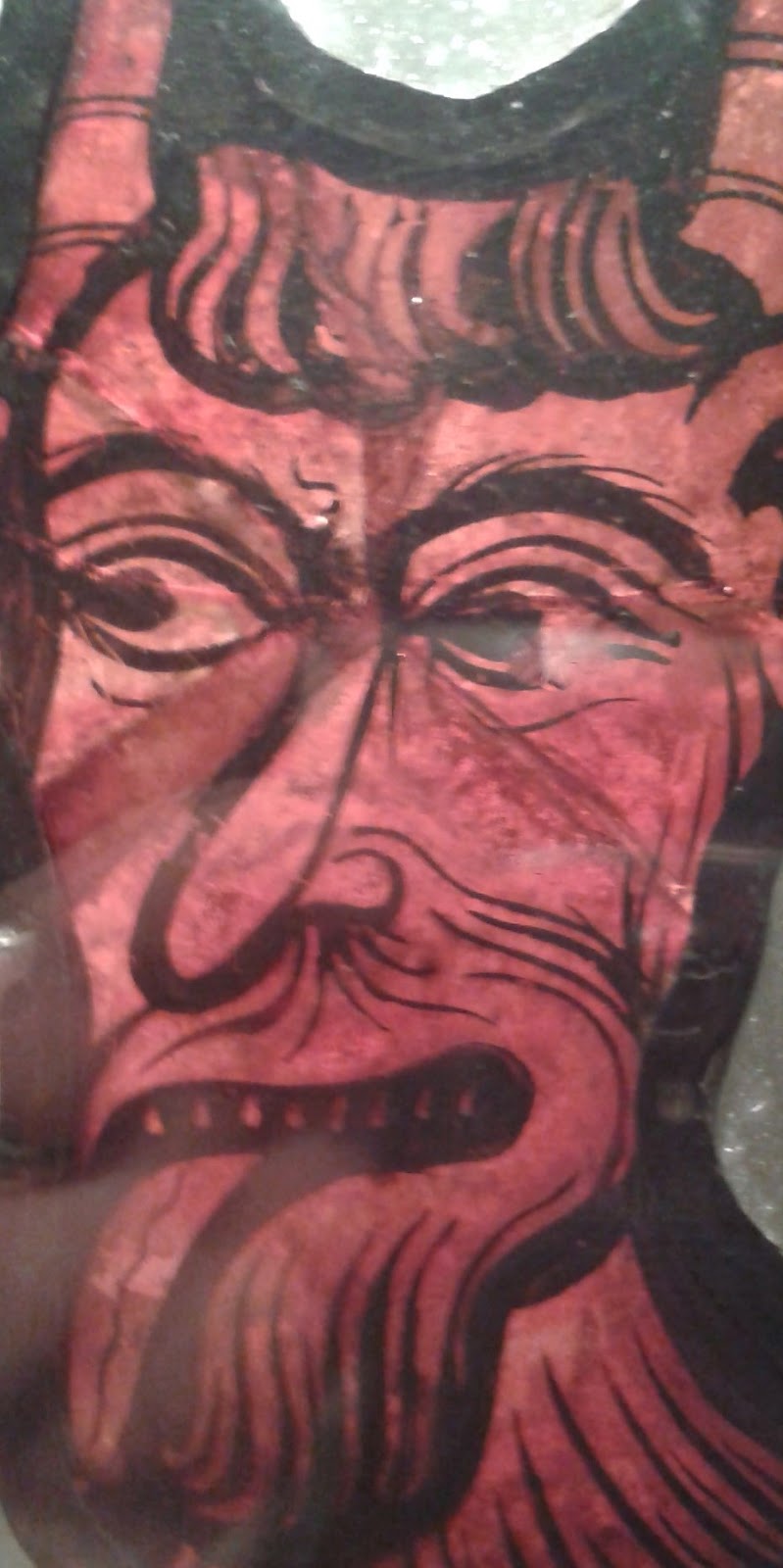
Christianity was of course the religion of Western Europe. It wasn’t just part of society: it was society. The fear of hell and of the Devil was very real. It’s the medieval period where we see the rise of sorcery, with many people genuinely believing in it as the Devil’s works and that people here on earth practised it. There are many colourful and bizarre accounts.

© 2014 E.M. Powell 

Pope Gregory IX, in his 1233 letter Vox in Rama, writes of gatherings of heretics who are engaging with the Devil, and indoctrinating a novice into their midst. The novice is met by 'a man of marvellous pallor, who has very black eyes...emaciated..and feels cold, like ice.' The man kisses the novice, and 'after the kiss, the memory of the catholic faith totally disappears from his heart.'  There is more kissing in the ceremony, involving a toad's tongue. And a cat's bottom. I did promise colour.

Medieval Murder

Every period in history has infamous murders. But the murder of Archbishop Thomas Becket in Canterbury Cathedral in 1170 has got to be one of the most well-known of all. It is also the most gruesomely shocking. Four knights, acting supposedly on the orders of King Henry II, broke into the cathedral on a late December evening and butchered Becket on the altar.

Monks witnessed the crime first hand and produced several blow-by-blow eye-witness accounts. The murder sent shock waves through though the whole of Europe. Becket was believed to be God’s representative on Earth. Miracles began to be attributed to the dead Archbishop immediately after the murder and he was canonized with great speed. Canterbury rapidly became one of the most popular destinations for pilgrims in the known world.

© 2014 Paul Fogarty - Private Collection
Used with permission

Medieval Marvels

So those are some of the highlights. I think you’ll agree that they give a flavour of why the medieval period is one of the most interesting, exciting and downright bizarre historical periods of all. For me, gin and syphilis are dull by comparison. Why not come and find out more? Oh, and if any medieval fans are reading this, feel free to add your favourite Medieval Marvel in the comments. We will prevail!

References

Dyer, Christopher: Making a Living in the Middle Ages, Yale University Press (2009)
Historic Royal Palaces: Experience the Tower of London (2013)
Jones, Dan: The Hollow Crown, Faber & Faber (2014)
Kors & Peters (eds.): Witchcraft in Europe 400-1700, University of Pennsylvania Press (2001)
Robinson, Tony: The Worst Jobs in History, Pan Books (2004)

~~~~~~~~~~~~~~~~

E.M. Powell is the the author of The Fifth Knight, a medieval thriller based on the murder of Thomas Becket. The sequel, The Blood of The Fifth Knight, has already reached #1 in Historical Fiction on Amazon.co.uk and is on worldwide release.


Her website is at www.empowell.com
Amazon.com
Amazon.co.uk
Barnes & Noble
Walmart

Giveaway: The Blood of The Fifth Knight by E.M. Powell

To celebrate its publication on January 1st 2015, E.M. Powell is giving away a signed paperback copy of The Blood of The Fifth Knight. It has already reached #1 in Historical Fiction on Amazon's UK site.

The Giveaway ends on Sunday January 04 2015. To see some more information about the book, please click HERE.

To enter the draw, comment below on this page and be sure to leave your contact details. Good luck!

The Murder of Thomas Becket

By E.M. Powell

Midwinter in England can indeed be bleak. Iron-hard frosts, smothering snow, torrential rain and gales: all can sweep down on these short days where daylight is gone by mid-afternoon. But at day's close on the twenty-ninth of December 1170, an event occurred that stunned medieval England and all of Christendom. Archbishop Thomas Becket was brutally murdered by four knights in his own cathedral at Canterbury. The knights came to Canterbury following an outburst by Henry II, king of England and much of France. It was a tragedy that had been set in motion many years before.

Canterbury Cathedral
© Shane Broderick Photography 

The son of a London merchant, Becket cut an imposing figure. He was over six feet tall (well above average for the period), with an aquiline nose, a "large brow", and "long and handsome face". He had a quick mind and a particular capacity to absorb and retain huge amounts of information. One chronicler states that he could even detect and react to distant smells and scents! Though he had stammered in his youth, he largely overcame this and was a fluent orator.

Appointed as Henry's Chancellor in 1155, Becket did not disappoint the King. He performed brilliantly in the role and the two men, Henry thirteen years younger than Becket, became extremely close. William Fitzstephen records "Never in Christian times were there two greater friends, more of one mind."

Henry makes Becket Archbishop of Canterbury
Liturgical comb c. 1200
© 2014 E.M. Powell 

One mind, perhaps, but of course Henry was king. And he was a king who was engaged in power struggles with Rome. On the death of Archbishop Theobald in 1161, Henry appointed Becket as Archbishop of Canterbury, believing Becket would simply do his bidding and act at all times on his behalf. Henry could not have been more wrong. Becket stood firm against Henry in matters of ecclesiastical law and power. Their disputes dragged on until in 1170 Henry had his son anointed as king by the Archbishop of York, a ceremony that was witnessed by ten other bishops. Becket's response? He excommunicated the bishops from the pulpit at Canterbury Cathedral on Christmas Day. When news reached Henry, he went into one of his legendary rages.

And his rages were indeed legendary. Henry could really let rip when roused. According to John of Salisbury, Henry once became so enraged during a debate about the King of Scotland that he flung off many of his clothes and started "chewing on pieces of straw." John also has Henry describing himself as "a child of anger." One of Henry's charters states that if anyone "should attempt to quash...this grant, he will incur the disfavour, anger and indignation of Almighty God and me."

Canterbury Cathedral
© Shane Broderick Photography 

So it was when Henry was informed of the news of Becket's latest actions. He "struck his hands together and exclaimed against it vehemently", his face "white with fury." His tirade against Becket was about the man's ungratefulness, too: he had raised Becket to a high position, and the only response was treachery. He worked himself up to a frightening pitch, ending with the words: "He has...shamed my realm; the grief goes to my heart, and no-one has avenged me!" Unfortunately, a group of barons who were listening took him at his word. They set off for Canterbury to avenge their king.

And who were these knights? It is unlikely they were part of Henry's intimate circle and acted to increase their favour with the king. William of Canterbury gives us their names and their descriptions. First was Reginald Fitzurse. "Urse" means "bear", and William claims the name indicated the man's savagery. Hugh de Morville's surname translates as "a village of death." William de Tracy is acknowledged as a brave fighter, but had a "sinful way of life." Richard le Bret became the Brute "on account of the depravity of his life." It was these who headed for the cathedral in which the holy man they sought was to be found.

Canterbury Cathedral
© Shane Broderick Photography 
The accounts of events from eight hundred and forty four years ago can often be sketchy. In the case of Becket's murder, we have detail upon appalling detail, as five monks were eye-witnesses to it and wrote their version.

When the knights arrived at Canterbury Cathedral, daylight was fading. They first took off their armour and went to confront Becket who was in the Episcopal Palace. They most likely had come to arrest him but Becket simply refused to comply. That did not help the situation. The knights went back out and started to put on their armour once more. The monks and clerks who were with their Archbishop were extremely concerned by now for Becket's safety. Even if no-one expected murder, they were aware that Becket could be hideously maimed or wounded in such a tense situation. No doubt Becket himself was also aware that this was now a very real possibility. The monks hustled him through to the Cathedral, though he protested throughout.

Carrying on with the rhythm of the day, the Office of Vespers was being sung, the monks voices echoing into the cathedral's high roof with the only light from candles or lamps. Such illumination would hardly have  pierced the chill darkness and cast instead deep shadows. Once the monks saw Becket, they halted their prayers, rejoicing that he was safe. It was only a temporary reprieve. As he walked to the altar, the knights burst in, armed with hatchets and an axe, Fitzurse yelling "Where is the archbishop, the traitor of the King?"

The Murder of Thomas Becket
Public Domain

Becket kept his composure, replying: "Here I am, not a traitor of the King, but a priest. Why do you seek me?" The knights were not so calm. They surrounded Becket, in a shouting, clamouring group, their lethal weapons ready and raised. Grabbing hold of Becket, they tried to manhandle him away but he grabbed for one of the stone pillars and refused to move. Then the Archbishop delivered an insult to Fitzurse, calling him a panderer or a pimp and challenged Fitzurse to kill him. This seemed to tip Fitzurse over into murderous rage, and he roared at de Tracy to strike. Becket bent his head in submission. He knew he was going to die.

Chasse showing the Martyrdom of Saint Thomas Becket c1190
© 2014 E.M. Powell 

De Tracy's first strike took off the top of Becket's skull and glanced off, injuring Brother Edward Grim. The watching appalled monks fled in panic, as Becket took another blow to the head but still remained standing. He must have been in unspeakable agony and shock, yet managed to speak for the last time: "For the name of Jesus and the good of the Church, I am ready to embrace death." De Bret thrust his sword through Becket's head with such force that the sword shattered on the altar stone. A cleric who had accompanied the knights scattered the Archbishop's brains, declaring, "He won't get up again." It was over. The knights left the cathedral and went to the Episcopal Palace, where they ransacked Becket's possessions.

Becket's body lay cooling on the altar as the traumatized monks made their way back in. Over the next few hours, people converged on the cathedral in horrified disbelief. Those who came dipped their fingers in the blood of their martyred Archbishop, daubed their clothes with it, and collected as much as they could. Terror still filled the air, with rumours flying around that the murderers were coming back to take the body, or to slay others. It was feared that the knights would defame Becket's corpse, and pull it across the city behind a horse, or display it on a gibbet. This could not be countenanced. The monks decided to bury Becket in the crypt as quickly as possible.

Canterbury Cathedral
© Shane Broderick Photography 

The miracles began that very night. A man who dipped part of his shirt into Becket's blood went home to his paralysed wife. As he wept in his telling of the murder, she asked to be washed in water containing some of the blood. She was cured immediately. A shrine was erected to Becket in the cathedral. An astonishing 100,000 people came to pray and visit Canterbury Cathedral in 1171 alone. The attributed miracles mounted up and in ten years, there were a total of 703 recorded. Becket’s intercession was in healing, casting out demons. He was prayed to by women in childbirth. When Queen Eleanor, the wife of King Henry III was expecting her fourth child, 1,000 candles were lit around Becket’s shrine.

Reliquary casket with scenes of the martyrdom c1173-80
© 2014 E.M. Powell 

And what of Henry, the king whose supposed utterance of "who will rid me of this meddlesome priest?" set the murder in motion? Henry had to give in on the matter of church courts. He also performed a number of acts of penance for the man who had once been his dear friend. The most extreme was on the streets of Canterbury on 12 July 1174, where he was scourged by eighty monks before spending the night praying at Becket’s tomb. In death, Becket had been victorious.

Canterbury Cathedral
© Shane Broderick Photography 

Saint Thomas Becket was a venerated saint for the next four hundred years. Until the arrival of another King Henry, Henry VIII. This Henry was going to take on the church. And win. When he achieved his aim of total control of the church, Henry VIII denounced Becket as a traitor. Becket’s shrine was destroyed, his bones were burned and the mention of his name was outlawed.

Canterbury Cathedral
© Shane Broderick Photography 

But Henry didn’t manage to erase the memory of Becket. People continued in their devotion to him as a saint. Today, Canterbury Cathedral still marks the place of Becket’s martyrdom and thousands continue to visit every year. Think of him today, at day’s close.

References:
Abbott, Edwin A.: St. Thomas of Canterbury: His Death and Miracles, A & C Black (1898)
Cathedral: Murder at Canterbury, BBC TV (2005)
Gervase of Canterbury: Thomas Becket's Death, from History of the Archbishops of Canterbury, Internet Medieval Sourcebook, Fordham University
Grim, Edward: The Murder of Thomas Becket, Internet Medieval Sourcebook, Fordham University
Guy, John: Thomas Becket, Penguin Books (2012)
Jones, Dan: The Plantagenets: The Kings Who Made England, William Collins, (2013)
Staunton, Michael (ed.): The Lives of Thomas Becket, Manchester University Press (2001)
Warren, W.L., Henry II, Yale University Press (2000)
Weir, Alison: Eleanor of Aquitaine: By the Wrath of God, Queen of England, Vintage Books (2007)
~~~~~~~~~~~~~~~~~

E.M. Powell is the the author of The Fifth Knight, a medieval thriller based on the murder of Thomas Becket. The sequel, The Blood of The Fifth Knight, has already reached #1 in Historical Fiction on Amazon.co.uk. It will be published by Thomas & Mercer on January 1st 2015. Her website is at www.empowell.com
Amazon.com
Amazon.co.uk

Photographer Shane Broderick specializes in studies of castles, churches and places of pilgrimage. To view more and to see his other work, please visit his Facebook Page at Shane Broderick Photography. You can also view his video here for more on Canterbury Cathedral. His photographs on this post have been used with his generous permission.


Cutting Through a Medieval Notion or Two

by Scott Howard

To those with  a jaded view of history, the Middle Ages was a dark period, seething with swarms of brutish thugs, toothless peasants resembling a human shaped piece of mud, and nobles living lavishly while villages burned.  Books and movies have overplayed this notion, thus depriving the world of the learning and reforms that sprang forth from this period.  Looking at something as simple as a sword can uncover our eyes and show us new worlds that we may have overlooked - worlds we didn't like, because we didn't understand them.   

Indeed, history has chronicled baseless acts and the ruling class thumbed their nose, or wrinkled it in distaste, at those beneath them, but the fact that, we, as modern people, could trace our past to the "lower classes" should say something about their character, their skills, and determination to pass on whatever legacy they possessed to the next generation.


Modern metallurgy has come a long way.  The medieval blacksmith was a part time brute hired by the local baron to produce arms and armor and completely void of skill, right?  The swords and arms they produced were lucky to survive a melee or a season of campaigns.  They were simpletons who could only dream of producing a sword with triple fullers, tapered blade, leather wrapped grip, fishtail pommel, and a crossguard that resembles a ribbon.  The physical balance of the sword that only modern science could produce mustn't be overlooked.

KHM Wien A 141 - Ceremonial sword of the Rector of the Republic of Ragusa, 1466
Creative Commons Attribution 3.0 Unported license.

These notions beg a few questions, though.  Are museum pieces such as the Ceremonial sword of the Rector of the Republic of Ragusa, (1468) mere flukes that they lasted for so long?  Or were medieval blacksmiths expert craftsmen whose reputations went alongside a lord and his retainers during the campaign season?  Were they more modern than thought?

Judging by the sheer volume of swords used during the Crusades and sundry great battles of the Middle Ages appearing in photos of personal and museum collections, the evidence clearly points to the latter.  It is astounding to see how closely modern replicas mirror their medieval predecessors and how well preserved the small details are - visible fullers, etchings and designs on the blades, the intricacies of the pommels, the variety of crossguard shapes and sizes, and even remnants of leather grips.

Space does not allow for the breadth of information on forging blades, the grinding process, and how, even in the mire of what we call the Middle Ages, there were skilled artisans and specialists that knew what would stand the test of time.  An intimate knowledge of the crystalline structure of steel was unknown, but centuries of craft passed through the generations more than made up for that lack.  

Moreover, there were strong guilds that ensured a level of quality concerning any product a blacksmith would produce.  In addition to arms and armaments, they repaired or made tools, farm implements, and sundry other products that were not a mere cobbling together of steel and luck.  If that were the case you would never be able to balance a close replica of a typical medieval sword in one hand for any length of time, nor would you be able to twirl it, toss it, or survive for a day in the life of a medieval knight.  


For more information and ingenious ways of forging and grinding quality sword steel, follow the link here.  To experience a daily dose of medieval and replica pieces, whose existence points to something other than preconceived notions of knowledge and skill, follow the link here.

~ Scott Howard Higginbotham
~~~~~~~~~~~~~

http://www.amazon.com/dp/B007EHUMSC?tag=forathogen-20&camp=0&creative=0&linkCode=as1&creativeASIN=B007EHUMSC&adid=0EC3CR9J80NNHXXSP77Q
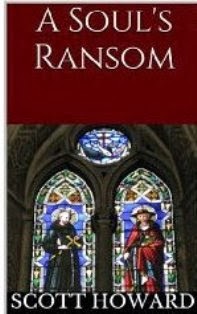
A Soul’s Ransom

 
Scott Higginbotham writes under the name Scott Howard and is the author of A Soul’s Ransom, a novel set in the fourteenth century where William de Courtenay’s mettle is tested, weighed, and refined, and For a Thousand Generations where Edward Leaver navigates a world where his purpose is defined with an eye to the future.  His new release, A Matter of Honor, is a direct sequel to For a Thousand Generations.  It is within Edward Leaver's well-worn boots that Scott travels the muddy tracks of medieval England.

The Importance of Lying Toads and "Irrelevant" Information

By Rosanne E. Lortz

More than once I have heard medieval chroniclers affectionately, or not so affectionately, referred to as “lying toads.”

For some, the appearance of a few (or more than a few!) non-factual statements is reason to steer clear of these primary sources. Better to turn to the “experts”, the modern historians who have sifted the wheat from the chaff and can tell us what really happened.

This has always puzzled me. Certainly, the medieval chroniclers do tell a tall tale now and then, but there are far more important reasons to read them than to find out what actually happened. We need to find out what the medievals think happened. We need to find out why they think it happened. We need to study what they wrote as a means of studying them.

An example would be concerning the size of armies. Medieval chroniclers are notorious for inflating the size of armies when discussing a battle. But instead of throwing the book aside in disgust, it is worthwhile to contemplate why the numbers are inflated. What does this exaggeration tell us about the society in which the chronicle was penned? Is there a standard trope for describing battles that the writers are adhering to?

Because of these obvious inaccuracies, some historians are tempted to ignore the chronicles entirely and only use “official” sources for their research—purchase records of the king’s court, statutes enacted in important cities. In The Autumn of the Middle Ages, early twentieth-century historian Johan Huizinga warns against this, saying:
Medieval historians who prefer to rely as much as possible on official documents because the chronicles are unreliable fall thereby victim to an occasionally dangerous error. The [legal] documents tell us little about the difference in tone that separates us from those times; they let us forget the fervent pathos of medieval life…. This why the authors of the chronicles, no matter how superficial they may be with respect to the actual facts and no matter how often they may err in reporting them, are indispensable if we want to understand that age correctly.
Another objection to using the medieval chronicles for research is that so often they don’t tell us the history that we’re interested in knowing. Sometimes what we consider the “real history” in chronicles will be blended with something else entirely. We have to skim through reams of non-pertinent information to get to the nuggets of fact about who ruled when and who fought whom.

But this presupposes that the things that are important to us today are the same things that should have been important to them then. The reams of “non-pertinent” information are things they wrote down on expensive parchment or vellum because they wanted them preserved for posterity.


Gildas was a sixth century monk who documented the Saxon invasions of Britain. He mentions Ambrosius Aurelianus, who is a piece of Arthurian legend. Frequently, scholars will pull these Arthurian fragments out of his work De Excidio et Conquestu Britanniae and discard the rest as the crazy polemic of a bitter old monk.

But instead of skimming through all the “boring” parts where Gildas is blaming the Britons for their sins and explaining the Saxon invasion as a punishment for their iniquities, it is useful to consider why Gildas included this. What does it tell us about Gildas? Is he an anomaly in his society or is his line of reasoning shared by many?

Bede, in his Ecclesiastical History of England written a century and a half later, echoes Gildas’ sentiments, saying that the invasion of the Saxons was punishment on the Britons for not sharing the Gospel with other peoples. It seems that this subject was of prime importance to at least the monastic portion of society. Was this opinion shared by society at large?

When we accept medieval chronicles on their own terms, not blindly accepting every word as fact but also not casually dismissing everything we find wrong or irrelevant, that is when we truly begin to learn about the society in which these chronicles were written. When we extend them the same courtesy that we would to a living grandparent, sitting at their feet, learning about what was important to them in “the old days”, that is when we come across the nuggets of gold that we didn’t even know we were looking for.
____

Rosanne E. Lortz is the author of two books: I Serve: A Novel of the Black Prince, a historical adventure/romance set during the Hundred Years' War, and Road from the West: Book I of the Chronicles of Tancred, the beginning of a trilogy which takes place during the First Crusade.

____

BIBLIOGRAPHY
Huizinga, Johan. The Autumn of the Middle Ages. Translated by Rodney J. Payton and Ulrich Mammitzsch. Chicago, IL: University of Chicago Press, 1996.

Medieval Sorcery

By E.M. Powell

At this time of year, there is much talk of witches, with large numbers of people happy to don a pointy black hat and party hard. Medieval people would have been unlikely to join in. The matter of anyone who practised magic was complex and they would have recognised the concept of a sorcerer rather than a witch.
© 2014 E.M. Powell 

In medieval Europe two forms of magic existed: natural and demonic. Natural magic used the hidden powers in nature, helping with cures and protection. Demonic magic was a perversion of religion, practised it was believed by those who had turned away from God and instead to the devil. It was the practise of sorcerers.

The Practice of Sorcery

It was a widely-held belief that sorcerers could curse somebody with words, leading to illness or death. Sorcerers were also thought to be able to cause animal death, crop failure or an adverse change in the weather. The evil words could be a corrupted blessing, or a simple appeal to the devil. The supposed victim was not usually present at the utterance of curses.


© 2014 E.M. Powell 
Far more useful evidence to those making accusations of demonic magic were physical objects left on or near their property by the sorcerer. These objects were considered to have magical properties that could inflict harm. They could include animal bodies, mysterious powders, human faeces or even wood from a gallows. Poisoned food was also a frequent accusation.

In 1326, Pope John XXII wrote in his letter, Sorcery and the Inquisitors, of many objects that could serve the sorcerer’s purpose:  ‘Grievingly we observe…that many who are Christian in name only…sacrifice to demons, adore them, make or have made images, rings, mirrors, phials, or other things for magic purposes and bind themselves to demons.’

He had experienced several attempts on his life, including one by poison and alleged sorcery.


© 2014 E.M. Powell 
There are also records of image magic. A sorcerer in fourteenth century Coventry was accused of making a wax image of a neighbour, sticking spikes into it that caused the man to go mad with a pain in his head and finishing him off by driving the spike through the image’s heart.

It was widely believed that impotence or lack of sexual desire was caused by sorcery. If a man consumed forty ants boiled in daffodil juice, then lifelong impotence would follow. Physician Arnold of Villanova wrote a treatise On Bewitchments around 1300 in which he gave numerous remedies. They include ‘fumigation of the bedchamber with the bile of a fish and smearing the walls with the blood of a black dog.’ That would indeed provide a certain ambience to a love nest.


© 2014 E.M. Powell 
Sorcerers
Some accounts of medieval sorcery are on a far grander scale.

Guibert of Nogent, writing around 1115, gives details of the heretics of Soissons. Meeting in underground chambers, they would light candles and then do something unmentionable to naked women with them. Indiscriminate sexual intercourse then took place. Any babies born from these acts were then allegedly burned at later meetings and their ashes baked into bread which was eaten. The strong overtones of blasphemy in this account are very clear.

William of Malmesbury (d 1142) wrote an account of the Sorceress of Berkeley, who had died in 1065. He describes her as ‘a woman addicted to sorcery…skilled in ancient augury, she was excessively gluttonous, perfectly lascivious, setting no bounds to her debaucheries.’ She repented on her death bed and begged for her body to be saved from Satan, with her corpse sewed up in a stag’s skin, placed in a stone coffin and weighted with lead and iron and secured with chains. It was no good. A devil broke into the church and made off with her on the back of a barbed black horse.


© 2014 E.M. Powell 
The legend of the Sorceress of Ryazan dates from 1237. At Ryazan, a town on the eastern border of medieval Russia, a ‘woman of astonishing ugliness’ arrived with other riders on a snowy morning, demanding tithes. She was spurned. A few months later, a horde of murdering Mongols sacked the town.

Sorcery Trials and Punishment 

Secular laws and Church laws/canons attempted to tackle the problem of sorcery, and mutually influenced each other.  Secular laws dealt with the crime of magic and attempted to address harm done to people by magic.


Penalties included execution. The Church could order penance for the sin of magic and/or could excommunicate the offender. Excommunication, with the threat of eternal condemnation to hell, was as terrifying as a death sentence.

From Sorcery to Witchcraft


© 2014 E.M. Powell 
A sermon preached by Bernardino of Siena 1427 encourages people to cry out ‘To the flames! To the flames!’ if someone offers to cure the sick with magic. He also encouraged people to report sorcery, because if they did not, they shared in the guilt.

Sorcery trials increased in the fourteenth century, but the latter half of the fifteenth century saw a dramatic increase. Heinrich Kramer published Malleus Maleficarum (Hammer of Witches, c 1486), the most important medieval treatise on witchcraft. It strongly emphasised the demonic element in sorcery and (tragically) the conspiratorial nature of witchcraft.

Medieval sorcery was evolving into witchcraft. And in its name, around 50,000 women and men were executed by burning at the stake or hanging from the fifteenth to the eighteenth century.

How interesting that John of Salisbury, (d 1180) secretary to Archbishop Thomas Becket, wrote in 1154 of ‘the belief in evil nocturnal assemblies, where infants are murdered and eaten by witches. Such beliefs also state that the infants are granted mercy by the witch-ruler, who returns them unharmed to their cradles. Who could be so blind as not to see in all this a pure manifestation of wickedness created by sporting demons?’ 
© 2014 E.M. Powell 

He answers his own question with a great deal of sense:
‘Indeed, it is obvious from this that it is only poor old women and the simpleminded kinds of men who enter into these beliefs.’

What a tragedy that his view did not prevail.


References:

Kieckhefer, Richard: Magic in the Middle Ages, Cambridge University Press (2000)

Kelly, John: The Great Mortality, Harper Perennial (2006)
Kors & Peters (eds.): Witchcraft in Europe 400-1700, University of Pennsylvania Press (2001)
Lindahl, C., McNamara, J & Lindow, J. (eds.): Medieval Folklore, Oxford University Press (2002)
Maxwell-Stuart, P.G.: Witchcraft- A History, Tempus Publishing Limited (2004)


E.M. Powell is the author of The Fifth Knight, an Amazon bestselling medieval thriller based on the murder of Thomas Becket in Canterbury Cathedral in 1170.

The sequel, The Blood of The Fifth Knight, in which someone is trying to murder the Fair Rosamund, mistress of Henry II, will be released by Thomas & Mercer on 01.01.2015. Visit her website at www.empowell.com

Amazon.com
Amazon.co.uk
Amazon,ca
Amazon.com.au


Giveaway: The Fifth Knight by E.M. Powell

E.M. Powell is giving away a signed paperback copy of The Fifth Knight, the #1 Amazon bestselling historical thriller.

This Giveaway ends at midnight on Sunday November 02 2014. To see some more information about the book, please click HERE.

To enter the draw, comment below on this page and be sure to leave your contact information. Good luck!

A Visit That Changed a Life and Led to Sainthood

by Kim Rendfeld


What did those Irish missionaries say to Richarius that made him give up what he knew and devote his life to Christ?

As with many early medieval saints, information about the seventh century Frank also known as Riquier is scant and contradictory, but the stories are tantalizing. Whether they’re true is up to the reader.

Richarius was born in a village then known as Centula in today’s France. Either he was working class guy who pursued rustic occupations or he was a nobleman, depending on which source you consult. With the events that follow, I think he was an aristocrat. Whatever his background, the visit of the two Irish missionaries, Caidoc and Fricor, changed his life.

When visitors arrived in Centula, they were mistreated by the locals. Except for Richarius, who offered his hospitality. After listening to their preaching, Richarius repented of his sins. So much that one story has him surviving only on barley bread strewn with ashes and water often mingled with his tears. Another has him offering protection to his guests so they could preach freely – something a nobleman could do.

A 17th century illustration
of St. Riquier Abbey (public domain)
Richarius later became a priest providing relief for the sick and poor and redeeming captives. He spent a few years as a missionary in Britain, then returned to Centula, where he founded a monastery around 625 and served as its first abbot. Such an accomplishment would be easier for a nobleman, especially if he already owned the property to give to the Church. Apparently, Richarius remained close to Caidoc and Fricor. They joined him at Centula and spent the rest of their lives there.

As an abbot, Richarius would be in a position of influence. He had control over land, which was power in early medieval times, and could make alliances among fellow noblemen, both lay and clergy. In addition, the medieval populace believed that prayers from the monks could sway events here on earth, including who won the battles.

During a visit from Frankish King Dagobert, Richarius impressed the monarch by giving him good advice, especially not to listen to flatterers, and the king rewarded him with a generous gift.

Richarius could have kept his place as abbot for life. Or if illness prevented him from performing his duties, he could retire in relative comfort at the monastery. Instead when his health was failing, he traveled 15 miles away to a forest and lived in a hut with only one companion, Sigobart.

St. Riquier’s relics in the abbey he founded
(photo by Paul Hermans,
used under the terms
of the GNU Free Documentation License)
Shortly before his death, believed to be April 26, 643, he told Sigobart to make a coffin. His grieving companion felled an oak in whose trunk the body was placed. The monks at Centula must have guessed that Richarius would soon be declared a saint, a decision of local bishops at the time, and took his relics back to the monastery.

About 150 years later, that monastery, named St. Riquier, became a center for learning with Angilbert as its abbot. His close friend, Charlemagne, provided a golden shrine for the founder’s relics.

Images via Wikimedia Commons

Sources

Lives of the Saints, Omer Englebert

A Dictionary of Christian Biography, Literature, Sects and Doctrines: Naamanes-Zuntfredus Sir William Smith, Henry Wace

The Lives of the Fathers, Martyrs, and Other Principal Saints, Alban Butler

Daily Life in the World of Charlemagne, Pierre Riché (translated by Jo Ann McNamara)

An Ecclesiastical History of Ireland, from the First Introduction of Christianity among the Irish to the Beginning of the 13th Century, John Lanigan

Kim Rendfeld’s latest release, The Ashes of Heaven’s Pillar (2014, Fireship Press), has a few scenes taking place at St. Riquier monastery 12 years before Angilbert became its abbot. During a trial there, the characters swear on a piece of wood from a tree the monastery’s founder liked to rest under. The Ashes of Heaven’s Pillar, Kim’s second book, is a tale about a medieval mother who will go to great lengths to protect her children. It is a companion to Kim’s debut, The Cross and the Dragon, in which a young noblewoman must contend with a jilted suitor bent on revenge and the anxiety her husband will die in the coming war.

Kim's book are available at Amazon, Barnes & Noble, and other retailers. To read the first chapter of either book, get purchase links, or find out more about Kim, visit kimrendfeld.com or her blog Outtakes of a Historical Novelist at kimrendfeld.wordpress.com. You can also like her on Facebook at facebook.com/authorkimrendfeld, follow her on Twitter at @kimrendfeld, or contact her at kim [at] kimrendfeld [dot] com.
Older Post ►
 

Copyright 2011 English History Fiction is proudly powered by blogger.com