Showing posts with label Henry VIII. Show all posts

The Man Who Died With Cromwell

by Nancy Bilyeau

The fall of Henry VIII's minister Thomas Cromwell was swift, deeply cynical and brutal to the point of savagery. And yet the worst part of it may have been that Cromwell saw it coming--and could not save himself.

Months before his arrest, Cromwell gathered his many servants and told them "what a slippery state he stood and required them to look diligently and circumspectly into their order and actions, lest, through their default, any occasion might arise against them."

Thomas Cromwell

Just as the nobility hated Cromwell's humbly born patron, Cardinal Thomas Wolsey, they loathed and envied the self-made man whom the king relied on through the 1530s, the man who had risen from blacksmith's son and mercenary soldier to Lord Privy Seal and Earl of Essex. Joining nobles such as Thomas Howard, Duke of Norfolk, in their hatred of Cromwell were the religious conservatives, led by Bishop Stephen Gardiner. Wolsey fell because he could not extricate Henry VIII from his marriage to his first wife, Catherine of Aragon. And once it became clear that the King wanted out of his marriage to fourth wife, Anne of Cleves, and Cromwell was not hastening to do so, the pack of enemies smelled blood.

Cromwell was arrested on June 10, 1540, in a way meant to cause as much humiliation as possible. The Duke of Norfolk ripped the Order of St. George from around Cromwell's neck while the Earl of Southampton tore the Order of the Garter insignia from his gown. "Traitors must not wear the garter," shouted Norfolk. Cromwell was then hustled directly to the Tower of London; within two hours, the treasurer of the royal household had emptied Cromwell's house of valuables while others ransacked his papers.

There was no trial. Cromwell was condemned of treason and "abominable heresies" and executed on July 28, 1540.

An execution on Tower Hill in the 1550s

But Cromwell did not die alone.

Following Thomas Cromwell to the scaffold erected on Tower Hill (not Tyburn, as some historians have written) was Sir Walter Hungerford. The decision to behead two men that day was unusual, though not unprecedented. Two noblemen that Cromwell had targeted for destruction--Henry Pole, Lord Montague, and Henry Courtenay, Marquess of Exeter--died together in late 1538. But those two men, condemned without trial for treason, were lifelong friends, distantly related, and requested a joint execution.

Why was Sir Walter Hungerford chosen for this ghastly honour? Cromwell was the author of the Reformation, a brilliant and ruthless statesman. His enemies sent Hungerford on the same path, from Tower of London cell to scaffold. It's a mystery that still swirls around that hot, pitiless day. In this post, I examine the myths, the theories and evidence.

True or False: Hungerford Was a Nobody

One theory is that Sir Walter Hungerford was an obscure and debauched criminal, so despicable that it would taint Cromwell to share a scaffold with such a creature.

Hungerford was a man of dark secrets, it would seem. But he was not a nobody.

Although some followers of Tudor history may not have heard of Hungerford, his family was a distinguished one with generations of service to the royal family. Sir Thomas Hungerford was steward to John of Gaunt in the 14th century and built the grand Farleigh Hungerford Castle in Somerset.

A reconstruction of Farleigh Hungerford Castle in its heyday

His son, Sir Walter, fought at Agincourt, served as an admiral and became Speaker of the House of Commons. The Hungerfords sided with the Lancastrians in the Wars of the Roses and accumulated much wealth, establishing a London house on the Thames near Westminster Abbey. Nonetheless, the family had an unpleasant reputation: "..their record for dishonesty, vice and violence seems to have been exceptional even in the unsqueamish age in which they flourished," reports one chronicler.

The Sir Walter Hungerford of our tale was born in 1503 and served as a squire of the body to Henry VIII. In May 1536, he was a member of the jury that heard the case of the accused lovers of Anne Boleyn--Mark Smeaton, Henry Norris, Francis Weston, and William Brereton. The King and Cromwell made it clear what verdict they expected to hear, and Sir Walter Hungerford delivered. Guilty, on all counts.


Anne Boleyn

On June 8, 1536 he was summoned to Parliament as Lord Hungerford of Heytesbury. By this time Hungerford owned estates all over Wiltshire, especially in Heytesbury parish. He was a man on the rise.

True or False: Hungerford an Important Cromwell Ally

Sir Walter married three times (more on his unhappy marriages later). In 1532, his father-in-law, Sir John Hussey, wrote to Cromwell, saying that Sir Walter "much desired" an introduction. To make the best possible impression, Hungerford sent Cromwell "a patent of five marks a year." In other words, he bribed him. Through serving on the jury condemning Anne Boleyn's lovers and paying his patent of marks, Hungerford must have pursued his goal in just the right way, for soon after, Hungerford became Sheriff of Wiltshire, an important position. By all accounts, he then dedicated himself to enforcing the law and rounding up traitors to the King.

So yes, Hungerford was known to be a Cromwell client and ally, but there were many other men who fulfilled more important roles in the kingdom. Hungerford's influence did not extend beyond Wiltshire. He was by no means a principal supporter, nor was he a royal councilor. So why kill him with Cromwell?

True or False: Hungerford was a Dangerous Traitor

One of the most striking things about Sir Walter Hungerford was how marital unhappiness, if not violence, surrounded him. Either his stepmother, Agnes, or one of his wives was found guilty of murder and hanged.  His marriage to Elizabeth, daughter of John, Lord Hussey of Sleaford, suffered when his father-in-law rebelled against Henry VIII in the religious rebellion known as the Pilgrimage of Grace. One of the aims of the pilgrimage was the removal of Cromwell. The rebellion failed; Hussey was executed. At around the same time, according to Elizabeth, her husband, Lord Hungerford, imprisoned her in the family castle and tried to do away with her.

After Cromwell's arrest, among all the letters found, was the one by Elizabeth accusing Lord Hungerford:
Here I have been for three or four years past, without comfort of any creature, and under custody of my lord's chaplain, which hath once or twice poisoned me, as he will not deny under examination. He hath promised my lord that he 'would soon rid him of me,' and I am sure he intendeth to keep his promise.
In the same letter, she said she refused to eat or drink anything the chaplain brought her, claiming that food donated by "poor women" was "brought to my window in the night."

Was the letter genuine? It's hard to know--after her husband's death, Elizabeth married the courtier Sir Robert Throckmorton and gave birth to four daughters.

The treason charges against Sir Walter Hungerford are also mixed up with the Pilgrimage of Grace. According to his indictment, in October 1536, Hungerford pretended to arrest a vicar sympathetic to the rebels, William Bird. Instead, he employed him as chaplain for "several months." (This was not the same chaplain as the man who supposedly imprisoned his wife; Hungerford had a large household.)

But even if true, was this enough to condemn a man to death?

True or False: Hungerford was a Witch

The second crime that Hungerford was accused of was witchcraft.

A 17th century witch

Supposedly, on March 22, 1537, at Farleigh Castle, Hungerford called upon two men, Sir Hugh Wood and Dr. Maudlin, to use magic to predict how long Henry VIII would live. The spring of 1537 was a dangerous time. The Pilgrimage of Grace was suppressed, but it had been a frightening struggle for Henry VIII and Cromwell. Their enemies were being rounded up and executed.

At that time, Prince Edward had not yet been born; Henry VIII had no male heir. It wouldn't have been surprising if some people had questions about the future of the kingdom. But using prophecy to forecast the length of the life of the sovereign was high treason. This was the same charge that brought down Edward Stafford, the Duke of Buckingham in 1521, also for supposedly employing minor religious figures to gaze into the King's future in his private castle. The similarity of the charges is striking--and suspicious.

True or False: Hungerford was a Moral Criminal

The third crime Hungerford was accused of was "the abominable and detestable vice and sin of buggery" with several servants. The Buggery Act was an act of Parliament passed in 1533, sponsored by none other than Thomas Cromwell. It was thought that he meant to use it to confiscate the property of monks accused of the crime.

Despite being married several times and fathering four children, was Hungerford gay? It's possible. Hungerford was the only person to be executed for the accused crime in the entire Tudor period. (Let me emphasize that being gay is not a crime at all!)

Another possibility exists. It's believed that in 1536, Anne Boleyn was charged with incest with her brother George as a shock tactic, the crime concocted to make it easier to condemn her on the shakier charges. Hungerford's enemies--whoever they were--might have tried the same thing in 1540.

July 28, 1540

A great many soldiers appeared on Tower Hill the day of the execution, in case of some last-minute defense of Cromwell. The chronicler Edward Hall said he was greatly mourned by the "common people." But there was no outcry on his behalf that day. Sir William Kingston, who listened to Anne Boleyn's terrified rambling while she was imprisoned, was still the constable. Perhaps it was Kingston who led Hungerford and Cromwell out to the hill and formally handed them over to the jurisdiction of the city of London for execution.

Eyewitnesses agree that Hungerford panicked before the crowd. Some modern historians refer to Sir Walter as well known for insanity. But the pragmatic letters he wrote to Cromwell just a couple of years earlier attest to Hungerford's being well able to function in society. It is likely that, during his weeks of interrogation and with the knowledge he would soon die on the block, Hungerford had a nervous breakdown, like Jane Boleyn would in late 1541.

Hungerford "seemed so unquiet that many judged him rather in a frenzy than otherwise," said one observer. Cromwell, who was about to make his final remarks to the crowd, took aside Sir Walter and said to him:
There is no cause for you to fear. If you repent and be heartily sorry for what you have done, there is for you mercy enough for the Lord, who for Christ's sake will forgive you. Therefore be not dismayed, and though the breakfast we are going to be sharp, yet, trusting in the mercy of the Lord, we shall have a joyous dinner.
Cromwell was the first to die, in a bungled beheading infamous for its ghastliness. Hungerford followed. Both bodies were carted to the nearby Church of St. Peter ad Vincula, within the Tower walls. Their graves are a few feet from Anne Boleyn's. As Macaulay wrote, "In truth there is no sadder spot on earth than that little cemetery."

Because he was a traitor, Hungerford's estates and homes were claimed by the crown. Henry VIII gave Farleigh Hungerford Castle to his brother-in-law, Sir Thomas Seymour. It was not a small acquisition. Which is perhaps as good a reason as any for the destruction of Sir Walter Hungerford.

The ruins of Farleigh Hungerford Castle today

~~~~~~~~~~~~~

Nancy Bilyeau is the author of the award-winning historical trilogy The Crown, The Chalice and The Tapestry, published by the Touchstone imprint of Simon & Schuster. The protagonist is Sister Joanna Stafford, a Dominican novice. To learn more, go to www.nancybilyeau.com


For the month of February, The Chalice ebook is discounted to $1.99 on Amazon and Barnes & Noble. The novel won Best Historical Mystery Award of 2013 from RT Reviewers. For details, go here.


Elizabeth of York - Mother of a Dynasty

by Judith Arnopp

Elizabeth of York
All images rom Wikimedia*
Unlike her son Henry VIII and the granddaughter named in her honour, Elizabeth of York isn’t a household name. When viewed against the back drop of other Tudors she is far less splendid than her children; she is conventional and appears obedient, even cowed perhaps. Her portraits show a pretty, plump, and resigned looking woman who doesn’t adhere to our imagined picture of the mother of a king, the grandmother of a king and two queens. But, although her meek expression belies her harsh experiences she was in fact, the founder of a dynasty.

Elizabeth was born on February 11th 1466 into the bloody era now known as the Wars of the Roses. She was the first child of Edward IV and Elizabeth Woodville. To everyone but the couple involved, this was an unconventional and unpopular match but, unlike other queens, Elizabeth Woodville was to prove satisfactorily fertile.

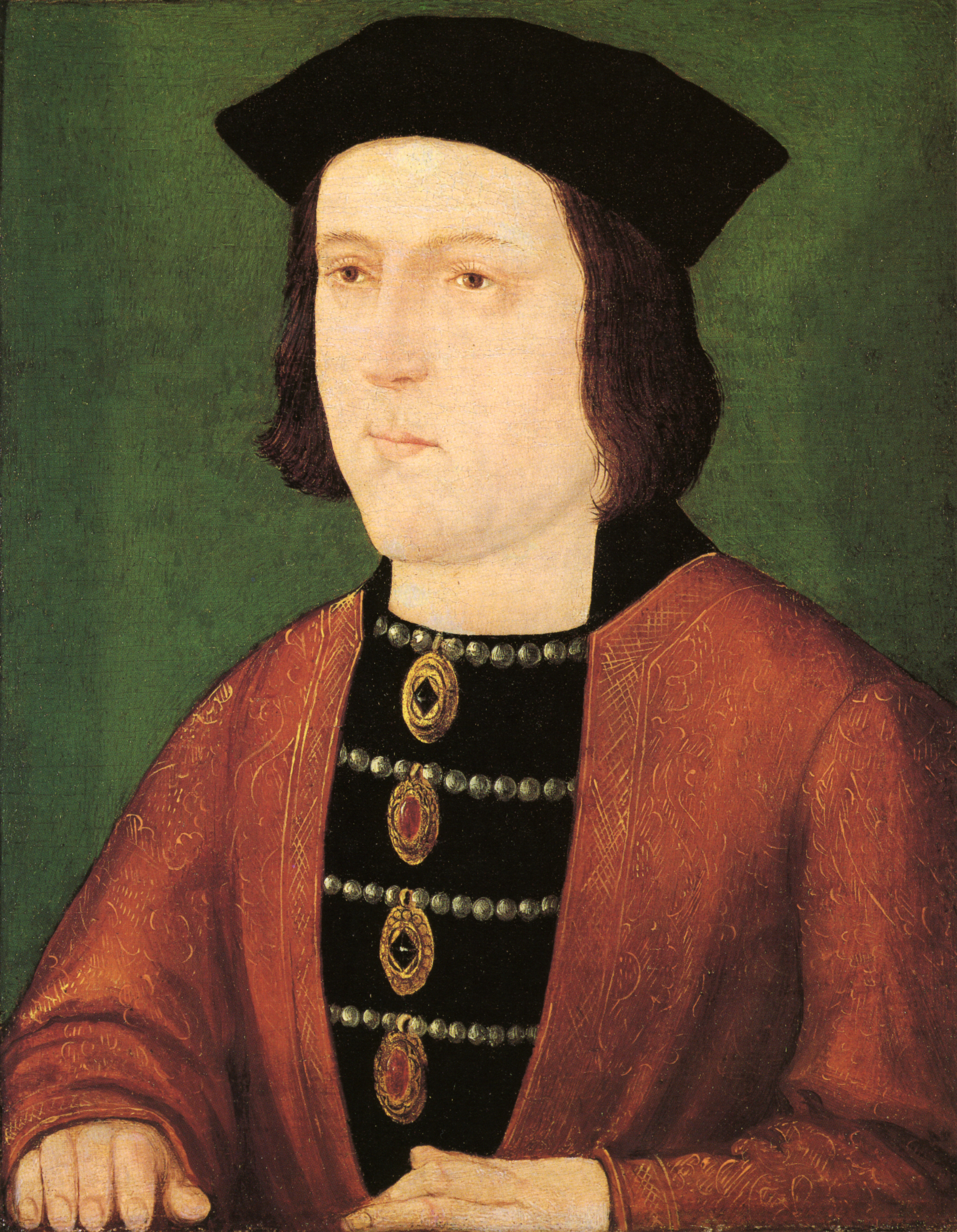
King Edward IV
It was a time of upheaval and when Edward was forced to flee into exile in Burgundy, the Queen, along with her daughters, fled into Sanctuary at Westminster Abbey.  There, safe from conflict but estranged from the exiled King, the first of the younger Elizabeth’s brothers was born. (The boy Edward would later earn his place in history by ‘disappearing’, along with his brother Richard, from the Tower of London, igniting a mystery that continues to burn today.)

Meanwhile, boosted perhaps by the good news, the exiled king gathered his forces and with the aid of his brother-in-law, Charles the Bold of Burgundy, returned to England to resume the battle for his throne, finally defeating Warwick and Margaret of Anjou and having the old King Henry VI murdered in the Tower. This initiated a time of relative peace.

For Elizabeth, now five or six years old, it was time for her education to begin. As well as the skills of running a huge household, she was also taught to read and write and given some instruction in accounting. Contemporary reports describe her as pious, obedient, and loving, and dedicated to helping the poor.

In 1475 when Edward made his peace with France, it was arranged as part of the treaty that on her twelfth birthday she would go to France to prepare for marriage to Dauphin Charles. But, before this could take place, France reneged on the deal and married his son to Margaret of Austria instead.

Elizabeth Woodville
Things ran smoothly for a while, or as smoothly as they ever do in royal circles, until, on the unexpected death of the King in 1483, Elizabeth fled once more with her mother into Sanctuary at Westminster. Richard of Gloucester took his place as Lord Protector and Elizabeth's brother, the Prince of Wales, was brought to London to await his coronation, as was tradition, in the royal apartments at the Tower. 

Shortly afterward it emerged (whether true or not is another question) that Edward IV’s marriage to Elizabeth Woodville was bigamous due to a prior contract of marriage. All children of the union between Edward IV and Elizabeth Woodville were pronounced illegitimate. As we all know, Gloucester was declared King Richard III, and at some point between 1483 and 1485, Elizabeth’s brothers disappeared from the record. (That is not proof however that they disappeared from the Earth – there are any number of possible explanations).

The Princes in the Tower
How must this have been for Elizabeth? One moment she is the Princess of the realm, Dauphine of France, and the next an illegitimate nobody living in exile from court in the squalor of sanctuary.

And what of her brothers' fate? She would have been ignorant of that, and the resulting uncertainty mixed with grief for her father can only have been hard. It is possible that her mother knew or believed the boys to be safe. Why else, after scurrying into the safety of Westminster in fear of her life, would she suddenly hand her daughters into the care of the very man suspected of injuring her sons? 

We cannot know the answer to that, but the uncertainties provide very tasty fodder for the authors of fiction.

Elizabeth and her sisters returned to court to serve Richard’s Queen, Anne Neville, where they were treated with every courtesy. Queen Anne was ailing and clearly dying. It was at this time that rumours emerged of a relationship between Richard and his niece, Elizabeth. It is now impossible to be certain of the truth behind the allegation, but at the time gossip was strong enough for Richard to publicly deny the accusation. Whether the claim was true or not, Elizabeth would have suffered some degree of shame, but she seems to have continued to be prominent at court, serving the Queen until her death in March 1485. 

In August, when invasion was looming, Elizabeth and other children from the royal nursery were sent north for safety while the King dealt with the threat from Henry Tudor.

Henry Tudor
Henry Tudor, the Lancastrian heir, was aided throughout his exile by his mother, Margaret Beaufort in England. Margaret had devoted her life to her son’s cause. She  untiringly devised methods to secure the throne she saw as rightfully her son’s. Prior to his invasion, in order to muster support from the Yorkist faction, Henry promised that, if he became king, he would marry Elizabeth of York and unite the warring houses of York and Lancaster, putting an end to the Wars of the Roses forever.

After Richard III’s defeat at Bosworth in 1485 Elizabeth was taken to Margaret Beaufort’s house at Coldharbour, but Henry was slow to marry her and slower to crown her. We should consider the logistics of arranging a royal wedding at short notice, but it not something that Henry VIII found an obstacle in the next reign. To some it is almost as if he wished to deny that Elizabeth had any influence on his claim at all. They were married in January 1486. Elizabeth gave birth to their first child, a son whom they named Arthur, in September of the same year scarcely nine months later. She had no further children until two years after her coronation which took place in November 1487.

Perkin Warbeck
Henry Tudor’s reign was fraught with rebellion. Pretenders emerged throughout, some were swiftly dealt with, but one in particular, Perkin Warbeck, claiming to be Elizabeth’s younger brother, Richard, harried the king for years. We will never know his real identity, although the King went to great lengths to provide him with a lowly one.

Elizabeth is always described as a dutiful wife and devoted mother. She took no part in ruling the country, and there are no reports of her ever having spoken out of turn or ‘disappointing’ the King. Henry appears to have been a faithful husband; his later relationship with Katherine Gordon, wife of Warbeck, was possibly no more than friendship, but Katherine did very well, both in status and financially, at Henry's court.

Although Prince Arthur was raised, as convention dictated, in his own vast household at Ludlow, Elizabeth took an active role in the upbringing of her younger children, teaching them their letters and overseeing their education.

Prince Arthur
When Arthur, the Prince of Wales, died suddenly in 1502, both Henry and Elizabeth were distraught, the King thrown into insecurity at having been left with just one male heir. Reports state that the King and Queen comforted each other and, although there are some hints of a possible estrangement between the royal couple, Elizabeth promised to give Henry another son. She fell pregnant quickly and, ten months later, gave birth to a girl, Katherine, but succumbed to puerperal fever and died on her birthday, 11th February 1503.

Elizabeth of York
Elizabeth deserves more credit. There is as much strength in resilience as in resistance, and I believe she was both strong and resolved, bound by duty to serve her country as best she could.

Her union with Henry negated the battle between York and Lancaster, and the many children she bore strengthened political unions with France, Scotland, and Spain. Ultimately, she died doing her duty to England.

When a king puts aside personal desire for the sake of his country or dies on the battlefield defending it, he becomes a hero; often, if he is on the right side, he is honoured throughout history.

Yet Elizabeth did all those things. She married dutifully; she quickly produced an heir, a spare, and several daughters to increase the king’s bargaining powers. At the tragic loss of the Prince of Wales, despite her age and the suggestion of medical problems, she took the most dangerous decision to try to give the King another son. She died a hero, in service of her King and country.

Images:
*http://upload.wikimedia.org/wikipedia/commons/9/95/Elizabeth_of_York_from_Kings_and_Queens_of_England.png
http://upload.wikimedia.org/wikipedia/commons/4/48/King_Edward_IV.jpg
http://upload.wikimedia.org/wikipedia/commons/2/2f/Elizabeth_woodville.jpg
http://upload.wikimedia.org/wikipedia/commons/c/c0/Princes.jpg
http://upload.wikimedia.org/wikipedia/commons/2/2a/Henry_Tudor_of_England_cropped.jpg
http://upload.wikimedia.org/wikipedia/commons/3/3c/Perkin_Warbeck.jpg
http://upload.wikimedia.org/wikipedia/commons/6/69/Anglo-Flemish_School%2C_Arthur%2C_Prince_of_Wales_%28Granard_portrait%29_-004.jpg
http://upload.wikimedia.org/wikipedia/commons/c/c6/Elizabeth_of_York%2C_right_facing_portrait.jpg

~~~~~~~~~~~~~

Elizabeth is the subject of my shortly to be published book A Song of Sixpence, in which I suppose that the younger of the princes was in fact rescued from the Tower in 1483 and re-emerges some years later as the man Henry names 'Perkin Warbeck'. 

The novel considers the division of loyalties a princess, born to the house of York, might have suffered in her union with the House of Lancaster. Would her support be for husband and her sons, or her long lost brother?

This is a massive issue to deal with in one blog, and I would encourage you to read more about Elizabeth in Alison Weir's book Elizabeth of York: The First Tudor Queen and Amy Licence's Elizabeth of York. 


For more information about my work please visit my webpage. 
Follow my blog.
Or find me on Facebook and Twitter.
My Amazon page is here if you are in the UK
or here if you are in the USA


"This Rough Magic": The Secrets of the Tudor-Era Seers

By Nancy Bilyeau

On January 12, 1559, Elizabeth Tudor entered the Tower of London to prepare for her coronation as Queen of England. Her half-sister, Mary I, had died on November 17th and Elizabeth seized the reins of power immediately, but the all-important coronation was not set to take place until nearly two months later.

The date when Elizabeth would ride through the city of London to Westminster Abbey was January 15th. At the suggestion of Robert Dudley, Elizabeth consulted Dr. John Dee, the astrologist and scholar who later served as Shakespeare's inspiration for Prospero in The Tempest. Dee chose the date as most favorable to a successful reign.

Elizabeth's years of reliance on Dee puzzles some people today. How could the Tudor queen, educated, enlightened and brilliant, known for saying, "I would not open windows into men's souls," make decisions based on an astrologer? But to wonder that misreads the importance of men like John Dee in the 16th century. The more well versed in the Renaissance the ruler was, the more he or she favored the educated seers and wizards.

The career of Dee echoes that of Nostradamus in France and Heinrich Cornelius Agrippa in Germany. By looking at them together, the life of a seer comes into focus.

Nostradamus

Of all the mystics who exerted influence in the 16th century, Nostradamus is the most notorious today. He has been the subject of hundreds of books and several recent television documentaries and is even portrayed by Rossif Sutherland (Donald's son) in a key role in the popular TV series Reign.

Catherine de Medici advised by Nostradamus (Sutherland) in Reign

Historians believe that Michel de Nostredame came from a family of Provence forced to convert from Judaism to Christianity. After years of censure, taxation and increasing acts of violence against Jews in both Spain and France, King Louis XII ordered the exile of all Jews from Provence in an edict published in 1500. The Gassonet family did not leave; they had already converted to Christianity, with their name changing from Gassonet to Nostredame, arguably one of the most Catholic names imaginable. Michel was born in 1503 in Saint-Remy-de-Provence.

Birthplace of Nostradamus in Saint-Remy
Michel definitely showed academic promise, learning Greek, Latin, Hebrew, logic and mathematics as well as medicine. At the age of 15 he entered the University of Avignon. But he was also drawn to the study of astrology, a respected practice in the 16th century, and herbal medicine. In his 20s, he achieved fame as a physician whose patients survived the plague more than average. In a time when medicine hurt more than it helped, Michel believed in fresh air, clean water and hygiene for patients--most unusual concepts--and prescribed a pill made of crushed rose petals. But after his own wife and children died of the plague despite his efforts to save them, he seems to have moved away from medicine and toward the arts of the occult. He wandered through Europe for years, and unfortunately became of interest to the Inquisition, who persecuted both conversos and those who dabbled in heresy. Somehow he managed to survive his Inquisitors, and subsequently became more--not less--interested in prophecy and mysticism. He Latinised his name to "Nostradamus."

In 1555, the first of Nostradmus's collections of prophecies foretelling the history of the world were published. The Queen of France, Catherine de Medici, who has gone down in history as a conniver and a poisoner, was also a passionate supporter of the arts, particularly architecture, and like other Renaissance patrons, was intrigued by prophecy. Many 16th century seers studied the philosophy of the ancient Greeks (as well as the Kabbalah and Arabic texts). The Queen summoned Nostradamus to the French court, and he advised her, on and off, until his death in 1566.

In the 16th century the most famous Nostradamus prophecy was a published quatrain:
"The young lion will overcome the old,
In a warlike field, in single combat,
In a cage of gold, he will pierce his eyes;
Two wounds being one he then dies a cruel death."
Based on contemporary sketch
In 1561, France's King Henry II died after being injured in a tournament joust. He was struck in the face, through his visor, by an opponent whose coat of arms included a lion. The lance drove into his brain just above his eye and he died days later, in agony. (In recent years, this chilling prediction has come under fire, as some say the quatrain came to light after the death of the Valois king, not before.)

Many of Nostradamus' prophecies seem to have been drawn from ancient end-of-world writings by Livy and Plutarch, among others, with astrological twists. Believers credit him with predicting everything from the French Revolution and American Civil War to the assassination of John F. Kennedy and World Trade Center attacks ("earth-shaking flames from the world's center roar"). But critics say his writings were vague enough to allow for just about any interpretation. Whether Nostradamus obscured his sincerely-meant prophecies to protect himself from the Inquisition or because they were cynically concocted wholesale inventions, we can never know.

Heinrich Cornelius Agrippa

In 1818's Frankenstein, Mary Shelley writes of an impressionable young medical student's fateful moment of discovery:
"In this house I chanced to find a volume of the works of Cornelius Agrippa. I opened it with antipathy; the theory which he attempts to demonstrate and the wonderful facts which he relates soon changed this feeling into great enthusiasm. A new light seemed to dawn upon my mind, and bounding with joy, I communicated my discovery..."
And so Victor Frankenstein was lost to his obsession--the creation of life.

Frankenstein: The man and his creation

The name Agrippa was not a fictional one but belonged to Heinrich Cornelius Agrippa, a 16th century German theologian, alchemist, philosopher and magician. Shelley's use of Agrippa's beliefs to fuel her tale is not as strange as it may seem at first glance. He also played an important part in a nonfiction book written by her journalist-philosopher father, William Godwin: Lives of the Necromancers. It's clear that this group of mystical thinkers--Godwin's list includes  not only Agrippa and Nostradamus but also Albertus Magnus, Roger Bacon,  and a dozen others--proved fascinating to the poets and philosophers of the Enlightenment.

Heinrich Cornelius Agrippa

Godwin wrote of Agrippa:
"He was one of the most celebrated men of his time.... It is more than probable that Agrippa was willing by a general silence and mystery to give encouragement to the wonder of the vulgar mind. He was flattered by the terror and awe which his appearance inspired. He did not wish to come down to the ordinary level." 
Like Nostradamus, Agrippa was a precocious student. Born in Cologne in 1486, he mastered six languages and studied medicine and law as well as the work of the Humanists. Alchemy was his passion rather than astrology, and he believed "magic comprises the most profound contemplation of the most secret things, their nature, power, quality, substance and virtues." He published De Occulta Philosophia, three volumes on magic, an influential collection still in print.

Page from Agrippa's book

Contradictions abound in the life of Agrippa. He served the Holy Roman Emperor Maximilian in various capacities--as secretary, soldier and perhaps spy--and dedicated a book to the Hapsburg Emperor's respected sister, Margaret of Austria. Eustace Chapuys, the erudite Imperial Ambassador to Henry VIII, was Agrippa's student, friend and correspondent.

And yet the aura of the black arts clung to Agrippa. Godwin repeats the oft-told tale that a black dog accompanying Agrippa on all his travels was "a devil attendant." And it is in Lives of the Necromancers that a bizarre story is told, of Agrippa meeting Henry Howard, Earl of Surrey, in Germany and showing him, in a "magic glass," the image of his far-away mistress. For other noblemen, Agrippa summoned up the images of Ovid and "the whole destruction of Troy in a dream."

Despite his writings on magic and being a vocal critic of witchcraft trials, Agrippa was never persecuted for his beliefs, perhaps because he was protected by the Hapsburgs. He died in Grenoble in 1535.

Dr. John Dee

If Agrippa is tainted with black magic, Dr. John Dee is associated with white magic--angels, to be specific. He spent years of his life trying to decipher the language of the angels.

Of all of his mystic contemporaries, Dee was perhaps the most brilliant. Along with his spiritual studies, he is believed to have coined the phrase "British Empire" and urged both Tudor queens to create a national library (they both said no, so Dee built up the finest private library in England, if not all of Europe).

Born in 1527, Dee attended Cambridge and studied mathematics and the sciences as well as astrology and alchemy. In his twenties, he worked as a tutor and advisor for the Herbert and then the Dudley families, two powerful Protestant clans in the reign of the boy King, Edward VI.

But on the death of Edward and accession of Queen Mary, the power structure turned inside out, and Dee received a chilling lesson in loyalty. He was arrested in 1555, charged with casting the horoscopes of Queen Mary, her new husband, Philip of Spain, and Mary's half-sister Elizabeth. To look into the future of the royals, forecasting their deaths, was treason, and people had perished for such acts in the reign of Henry VIII. Moreover, Dee, a Protestant, was suspected of sympathy with the Princess Elizabeth, held in prison for her possible involvement in the Wyatt Rebellion.

Elizabeth Tudor

Informers were found who said Dee "endeavored through enchantments to destroy Queen Mary." He was interrogated, found wanting, and referred to the Star Chamber. Though he defended himself well, Dee was then charged with heresy and delivered to the Bishop of London, Edmund Bonner, one of the most diligent persecutors of heretics, later dubbed "bloody Bonner" by John Foxe.

Edmund Bonner, bishop of London

Things couldn't have looked bleaker for John Dee. Yet somehow he survived, not only convincing Bonner of his innocence and becoming a Catholic chaplain but even assisting Bonner in some of his interrogations of other Protestants. (He took on the "Dr." honorific because he was ordained by Bonner.) When Elizabeth took the throne, Dee rapidly switched back to the Protestant side, becoming Elizabeth's cherished special advisor, while Bonner, holding fast to his Catholic beliefs, ended up dying in prison.

Throughout his long, colorful, often controversial career, Dee would need to show nimble survivor tactics time and again, though perhaps none quite so extreme as this. Nonetheless, Dee, despite his partnership with necromancer Edward Kelley (see below), is a benevolent figure in today's pantheon of seers. In fact, it is his tall, thin, white-bearded visage and scholarly, mentorish demeanor that seems to have inspired the wizards created by J.R.R. Tolkein and J.K. Rowling.

John Dee

It is a legacy that, one feels, John Dee would have entirely approved of.


-----------------------------------------------------------------------------

This is the latest in a series on magic in history:

From Homer to the Hobbit, the History of the Necromancer

Henry VII and the Curse of Prophecy

The Strange Life of Edward Kelley


Nancy Bilyeau is the author of the award-winning historical thriller trilogy The Crown, The Chalice and The Tapestry.

The Crown and The Chalice have been published by Simon & Schuster in North America, Orion in the United Kingdom, and DTV in Germany. The Crown was an Oprah pick for 2012 and The Chalice won the RT Reviews Award for Best Historical Mystery of 2013. The Tapestry will be published on March 24, 2015. Follow Nancy's updates and tidbits on the world of Tudor England on Twitter @tudorscribe. For more information, go to www.nancybilyeau.com

The Tapestry goes on sale 3/24/15

An Apologia For Sir Thomas Boleyn

by Janet Wertman

Today is an appropriate day to examine the life of Thomas Boleyn, since it was on December 8, 1529 that he was created Earl of Wiltshire and Ormonde. Before this point, it really could be argued that Sir Thomas had earned all his own success – he was an extremely intelligent and ambitious man, he married well, and he worked hard. Still, the smartest thing that Sir Thomas did was to educate his children so that they too could contribute to the family’s advancement. Because it is absolutely the truth that the most significant part of Thomas Boleyn’s rise is due to the fact that Henry VIII fell in love with his daughter Anne.

Born around 1476/1477 to landowner Sir William Boleyn and his heiress wife Margaret Butler, Boleyn scored his first political coup in 1422, when he was around 22 years old: he married Lady Elizabeth Howard, the oldest daughter of Thomas Howard, Second Duke of Norfolk. The match was a brilliant one for Boleyn, much higher than he should have been able to expect – but then, Howard was still in a bit of disgrace and relatively impoverished at the time: he and his father had supported Richard III against Henry Tudor at the Battle of Bosworth in 1485. Howard’s father died on the field, while Howard was stripped of all the family’s titles and sent to the Tower. In 1487, Howard refused an opportunity to escape during the rebellion of the Earl of Lincoln, which started his return to favor. In 1489, he was restored to the Earldom of Surrey, but not yet to the Dukedom or any of his lands. That step would wait until 1514, some five years after Henry VIII had acceded to the throne and Howard had proven his worth by crushing a Scottish invasion while the King was in France.

Meanwhile, thanks perhaps to a real talent for languages, Thomas Boleyn was fast becoming one of Henry VIII’s leading diplomats. In 1512, he was one of a party of three envoys sent to the Netherlands. From 1518-1521 he was Ambassador to France, where he was involved in arrangements for the 1520 Field of the Cloth of Gold meeting between Henry and the new French King Francis I. And from 1521 to 1523, he was an envoy to Charles V, Holy Roman emperor and King of Spain. He was well rewarded for this work: by 1522 he had been granted about two dozen manors, he was a member of the Privy Council, he was the Treasurer of the King’s Household (a promotion from Comptroller, which he was named in 1520).

The 1522 date is significant because that is thought to be around the time that Sir Thomas’ oldest daughter, Mary Boleyn, became the King’s mistress. During the Shrovetide joust that year, the King wore a badge that read “Elle mon coeur a navera” (she broke my heart) that was rumored to refer to Mary. It is not known how long the affair lasted, many believed it was quite brief, but it is safe to say that Mary got nothing from it (though the King did name a ship after her, which must have proved awkward in later years…). Some have argued that Sir Thomas appropriated the benefits that could have gone to Mary: he was made a Knight of the Garter in 1523, then given the title of Viscount Rochford in 1525. This is possible, but not conclusive. After that, of course is a different story.

Henry is thought to have fallen in love with Anne Boleyn in 1525 – this time signaled by a joust badge that read “Declare je n’ose” (declare I dare not). While Thomas continued to perform well in the royal assignments given to him, the elevation to the Earldoms of Wiltshire and Ormonde in 1529 are clearly attributable to Anne because the Ormonde title represented a reversal of the King’s prior position on the matter. Sir Thomas had tried to claim the earldom through his wife when Thomas Butler, 7th Earl of Ormonde, died in 1515, but Henry decided that Piers Butler, a more distant relation, should get it. By 1529, Henry was in the position of trying to burnish his beloved Anne’s background: he wanted to honor her father with both his “hereditary” title of Earl of Ormonde as well as the Earldom of Wiltshire. (Henry accomplished this by persuading Piers Butler to resign the Ormonde title and accepting the Earldom of Ossary several days later as a consolation prize.)

Given this history, many people accuse Sir Thomas of throwing his daughters at the King just so that he could prosper for himself. Whether this is in fact true depends on how the story is told. Was he a pander? Yes by today’s standards, no by those of his time. In Tudor times, pleasing the King led to power and fortune – displeasing him resulted in punishment and even death. There was no refusing the King (before Anne, anyway) so once the King’s eye fell on a woman, there would have been no question that she should submit. What that means in relation to Sir Thomas is a little more subtle than that, and again there is a distinction between Mary and Anne.

Mary had a terrible reputation. She wasn’t thought to be terribly bright. She was accused of having taken many lovers at the French court, some say the French King himself. She still managed to marry a man from a wealthy family – William Carey – though he was only the second son of a mere knight. The thing is, Mary does not seem to have been motivated by money given how she derived no benefit from her relationship with the King. Yes, her father was appointed to the Privy Council, but he could have done that on his own. That more than anything else is what would have disappointed Thomas Boleyn. (There is a possibility that Henry arranged the 1520 marriage with Henry Carey. If this is true, Sir Thomas might still have been disappointed because he would have been looking to the example set by Bessie Blount, who married Gilbert Tailboy, 1st Baron Tailboys of Kyme although admittedly after bearing the King’s bastard son. )

Anne’s story gets more complicated. She was highly educated and very accomplished. She had acquitted herself well in impressive positions in the courts of the Netherlands, France, and then England - and without a single blemish on her reputation. She really had it all. She should be able to marry high. Indeed, she set her sights on Henry Percy, the heir to the Earldom of Northumberland. He fell in love with her and offered her marriage. Unfortunately, the public story at the time was that she had aimed a bit too high: Wolsey summoned the unfortunate Percy to chastise him for dallying with “That foolish girl yonder in the court, I mean Anne Boleyn.” There are those who claim that the reason Wolsey destroyed the relationship was because Henry VIII had already fallen in love with her and didn’t want her taken away up North. That – combined with her sister’s example – would certainly have prompted her refusing the King.

It cannot be understated how revolutionary an action this was back then. No one had ever refused a king, the anointed of God. Thomas Boleyn would never have believed - no one would ever have believed – that the King would leave Catherine of Aragon and marry Anne. The world was positive that she would have to give in at some point – but they underestimated Anne’s resolve and political acumen. During seven long years, she would get into fights with the King and retreat to Hever Castle – forcing Henry to use Sir Thomas as his go-between to beg her forgiveness. As the stakes continued to rise, Boleyn must have been quaking in his boots until the wedding and Anne’s coronation.

Understanding this side of Thomas Boleyn helps us to accept his behavior once his daughter’s downfall became clear. As early as April 24, 1536, the net tightened around Anne Boleyn. On that day, Henry signed a document authorizing the Council to begin an investigation into the activities of the Queen and her alleged lovers. Thomas Boleyn was a member of that Council, he knew then that his daughter was in danger. Did he warn her? He must have said something. History has recorded a scene after that date and before her arrest where Anne waited for the King in the courtyard below his apartments with their daughter Elizabeth. When Henry appeared at an open window, she held up the young princess and entreated her husband. We are told that Henry was embarrassed and annoyed, “though he concealed his anger wonderfully well,” before he made some excuse and turned away.

Still, it is questionable at this point whether Thomas Boleyn’s warning was explicit enough. Probably not, but it is likely that the Boleyn family thought that the investigation was a precursor to a simple annulment. We do know that Anne did not blame her father at all. Indeed, when Anne was first arrested, her thoughts were for her family. She asked Master Kingston, the Constable of the Tower, where her father and her “sweet brother” were. She also lamented that her mother would die of sorrow for her.

The next weeks must have been a horrendous experience for the man. Because Cromwell was determined to cleave to a show of justice, Anne was given a trial rather than condemned by Act of Attainder as she might have been. The King’s council all served as jurors – except for Thomas Boleyn. Although he did cast a guilty vote for his daughter’s alleged paramours, he was excused from participating in the trials of his two children. He is said to have assured the King and Thomas Cromwell of his willingness to appear (Chapuys reported that he had “wished to be present”) – though this can be explained by his fear of being added to the extensive list of victims if he didn’t.

Two months after Anne’s death, Thomas was stripped of his post of Lord Privy Seal, which went to Cromwell. Or perhaps he resigned it so that he could retire to Hever, having proved his loyalty and saved his life. That loyalty was acknowledged in October 1537, when he was chosen to carry the taper at the christening of the young Prince Edward. While he might thereafter have resumed some royal favor, Thomas Boleyn chose instead to retire from court. His wife died in April 1538, he followed her less than a year later in March 1539.

In all, Thomas Boleyn died a broken man. It is fascinating that during his lifetime, he earned enormous sympathy whereas now he is vilified – an interesting contrast to his daughter Anne who was hated during her lifetime but redeemed by her innocent death. I think it is time we let Sir Thomas off the hook just a little bit….. and celebrate with him on this day when life was looking as promising as it would ever get.

***

Janet Wertman is a freelance grantwriter by day and a writer of historical fiction by night. She is currently working on a novel of Jane Seymour, Henry VIII’s third wife, which is expected to be released in 2015. She regularly blogs about the Tudors and what it’s like to write about them – and since this was her first-ever guest post, she has written a companion piece you can find on her website: www.janetwertman.com.


***

FOR FURTHER READING:

Hester W. Chaman, The Challenge of Anne Boleyn. Coward, McCann & Geoghean, 1974
Eric W. Ives, The Life and Death of Anne Boleyn; Blackwell Publishers, 1986
Lauren Mackay, Inside the Tudor Court: Henry VIII and his Six Wives through the writings of the Spanish Ambassador Eustace Chapuys; Amberley Publishing, 2014
Retha M. Warnicke, The Rise and Fall of Anne Boleyn; Cambridge University Press, 1989


Who Was the Real Charles Brandon?

By Nancy Bilyeau

English Princess Mary Tudor
Erasmus said of Mary Tudor, "nature never formed anything more beautiful." The pampered and adored younger sister of Henry VIII was married at 19 to Louis XII, king of France. After the princess arrived in Paris with her dowry of 400,000 crowns and hundreds of attendants, the French, disposed to find her a disappointment, admitted that she was, indeed, a "nymph from heaven."

King Louis, 52, crippled with gout, died less than three months after the wedding but not before showering his teenage wife with jewels, including "the Mirror of Naples," a diamond pendant with a pearl "the size of a pigeon's egg." Everyone expected the widow of the French king to make another spectacular royal marriage.

Instead, while still in France, she secretly took as her second husband a 31-year-old Englishman, Charles Brandon, the newly elevated Duke of Suffolk, celebrated for his good looks, military valor and jousting skill. Before she sailed for France, Mary had told her brother she would only agree to wed the old French king if she could choose her second husband herself. Desperate for the diplomatic alliance, Henry VIII had agreed. But Mary feared that if she returned to England, her brother would force her into another arranged marriage. She persuaded Brandon, whom she had known for years and had probably fallen in love with in England before her marriage, to marry her.  They had no permission to do so and were in disgrace, with Brandon facing arrest, until Henry VIII forgave them. Charles Brandon was, after all, his best friend.

It was a highly romantic episode, inspiring a stream of novels over the centuries, most significantly When Knighthood Was in Flower in 1898, which sold so many copies it inspired a burst of similar historical novels and no less than three films, including one in 1922 financed by William Randolph Hearst and starring Hearst's mistress, Marion Davies.


Mary Tudor and her new husband, Charles Brandon


A booted Marion Davies in When Knighthood Was in Flower


"Margaret" Tudor (Gabrielle Anwar) and Charles Brandon (Henry Cavill) in the miniseries "The Tudors"

But the real Charles Brandon, while an impressive and charismatic man to his contemporaries, is not a one-dimensional figure of handsome chivalry. His record with women was notorious. He'd already been married twice when he wed Mary Tudor--one of the wives still alive and fighting the annulment --and had contracted to wed yet a third, a child heiress whose family title he was using. A year and a half before he married Mary, ambassadors gossiped that he was trying to seduce Margaret of Austria, Regent of the Netherlands and daughter of the Holy Roman Emperor. The root of his behavior was not womanizing--or at least not only womanizing--but a willingness to use women as a means of gaining fortune and, if possible, fame, a common policy in the Tudor and Stuart age. He had a powerful sexual appeal, and he monetized it.

Like many real people of Henry VIII's court, Brandon is made up of both light and shadow. He is a product of the man-on-the-make spirit of the early Tudor age, which itself was made possible by the violent chaos of the death of Plantagenet rule.

His life is buried in myth, and the first is that of favored royal ward, orphaned by the Battle of Bosworth when his father, Sir William Brandon, a heroic man of "pure Lancastrian heritage" bearing the standard of Henry Tudor, was personally slain by Richard III. Which is not true in every respect.

The Brandons were an old, respectable country family. They lived in a small West Suffolk town, drawing income from farms and cattle for at least three centuries. A Geoffrey Brandon, succeeding in trade in Norwich, sent his son, William, to London in the last half of the 15th century. Says one historian: "He was a pushing, shrewd, energetic and very unscrupulous knave, who soon acquired great influence in the city and amassed corresponding wealth. Finally he became sheriff and was knighted by Henry VI." Yet when Henry VI was no longer king, replaced by the Yorkist Edward IV, Sir William Brandon switched to that side, and he lent Edward IV "considerable sums of money."

Which Edward IV declined to pay back.

Ordinarily a rich man would have had no recourse to a King's reneging. But when King Edward died, and his brother Richard III displaced his nephews and took the throne, an opportunity arose for another switching sides. Henry Tudor, in exile in Brittany, was now the leader of the Lancastrians. Brandon threw his support to Tudor. Two of his sons, William and Thomas, joined the Duke of Buckingham's rebellion against Richard III and when it failed, they fled England to join Tudor's cause. William was married to a young widow with some money named Elizabeth Bruyn. In 1484, she gave birth to Charles, the future Duke of Suffolk, in either England or France, and died shortly after.

But before we travel to the heroics of Bosworth, a terrible fact must be disclosed about the young William Brandon, knighted by Henry Tudor before they invaded England. He was, by one historical document, a rapist. In 1478 he was "in ward" for raping an "old gentlewoman" and her daughter, according to Paston. One chronicler of the time thought he would hang for it, but for unknown reasons he went free. The veracity of this record is debated today.

Early 19th century depiction of the Battle of Bosworth

It was a period of sexual brutality. Edward IV tried to assault a beautiful young woman named Elizabeth Woodville but she turned a knife on her own throat, threatening to kill herself. Somehow this made the right kind of impression, and she became his wife and queen. He had countless mistresses, passing them to his courtiers when he tired of them, often against their will.

But even within this context, standard bearer was a great honor, and William Brandon was a strange choice for it. He was not a close friend of Henry Tudor's, he lacked a distinguished battle record and he was no noble. Probably Tudor, who left England for foreign exile in 1471, did not know about the rapes. One theory is William Brandon was chosen to carry the standard and stand at the side of Tudor because he was tall and strong. Nonetheless, Richard III is said to have "cleaved" his skull in his desperate charge on Tudor. Brandon's death was the most notable loss on Tudor's side.

After Bosworth, the baby Charles Brandon was an orphan. But the romantic tradition that a grateful King raised the boy with his son Henry, sharing lessons, is simply not correct. There is no record of him living with the royal children. And Charles was seven years older than Henry (and two years older than Arthur). As an adult, he was obviously intelligent but knew scant French and exhibited no interest in scholarship; he lacked Henry VIII's knowledge of languages, history, theology, and literature. Instead, Charles Brandon seems to have spent his childhood in the care of his grandfather and uncles, possibly in the country. His later letters, the "worst spelled and written of his day," were "phonetically spelled, proved him to have spoken with a broad Suffolk accent."

When Charles' grandfather died, the family fortune passed to the oldest surviving uncle, Richard. Little Charles had nothing.

Thomas Brandon is an underappreciated force in the life of Charles. He was an ambitious man of ability who managed to advance himself in the court of Henry VII, and he pulled his young nephew Charles along as best he could. After he became Master of Horse, he found a place for Charles in Arthur's household: he was a sewer, or waiter. A far from cry from the legendary status of chosen playmate to princes.

How then did Charles Brandon rise so high from such inauspicious beginnings, sewer to duke? Like Thomas Cromwell, he used his personal gifts and worked extremely hard. Cromwell was a brilliant lawyer. Brandon was an outstanding athlete, the best jouster in a highly competitive group of men fighting for the attention of first Prince, then King Henry. At the age of 17, he appeared in the lists honoring Arthur's wedding to Catherine of Aragon, and was noticed by all for his prowess when he rode in a tournament held in honor of Philip of Austria and his wife, Joanna of Castile, in 1506. At this time young Brandon was serving as Master of Horse for the Earl of Essex. That household is where he lived; he did not have lodgings at the royal court.

This is the time when he began his marital misadventures. He seduced Anne Brown, a gentlewoman of good family serving Queen Elizabeth, and according to her family, promised to marry her. She was pregnant by him in 1506. But then Brandon jilted her for her wealthy widowed aunt, Dame Margaret Mortimer, old enough to be his mother. They married and, once he got his hands on her property, he sold it all and kept the cash. An appalled Venetian ambassador wrote, "In this country, young men marry old ladies for their money."

In 1507, 23-year-old Charles Brandon had the brief marriage annulled and returned to Anne Brown, whom he married. They had two daughters before she died in 1511.

Mary Brandon, by Holbein. She was one of the daughters from his first marriage.

 Lady Mortimer bitterly opposed the annulment, and became a thorn in Brandon's side for 20 years, until he managed to get the pope himself to support the annulment in 1527. The mess of his early marriages was to haunt not just Brandon but his descendants. Elizabeth I was supposed to have examined the legal documents of the Mortimer annulment to find a way to discredit Brandon's granddaughter, Catherine Grey, who many considered next in line to the throne but who Elizabeth loathed.

After Henry VIII succeeded, Brandon rose higher and higher in his estimation, based mostly on his tournament prowess. He took over his uncle's position of Master of Horse. When England went to war with France, Brandon served with great bravery and distinction. Throughout his long life, he was to serve Henry VIII on the battlefield time and again. "He is like a second king," an awestruck advisor wrote Margaret of Austria.

Margaret of Austria

Back in England, Brandon was soon up to his old tricks. He signed a contract to marry his 10-year-old ward, Elizabeth Grey, a wealthy heiress, and was known as Lord Lisle, her family's title, until his best friend, King Henry VIII, made him Duke of Suffolk. "From a stableboy into a nobleman," commented Erasmus skeptically. He was one of only three dukes in England.

Brandon was still contracted to his ward when he flirted with Margaret of Austria, pretending to steal her ring while Henry VIII laughed in encouragement. There were rumors that she would marry him, until her father, the Holy Roman Emperor, grew furious. She backed away quickly.

Young Henry VIII


A 19th century historian wrote of Henry VIII and Charles Brandon:
"The two men were of the same towering height but Charles was, perhaps, the more powerful... both were exceedingly fair and had the same golden curly hair, the same steel gray eyes planted on either side of an aquiline nose.... owing to the brilliance of their complexions, they were universally considered extremely handsome."

This was the man Princess Mary fell in love with at the same time her brother was arranging her marriage to the King of France. There is no hint of impropriety between them at the English court; she was scrupulously chaperoned. Brandon did not escort her to France. So why did Henry VIII send his friend, infamous for his treatment of women, to escort a vulnerable Mary back to England after King Louis died? He is supposed to have made Brandon promise not to marry her in France. Brandon was always a loyal friend to Henry VIII...yet he did marry her. The French royal jewels that the couple smuggled out of the country and gave to Henry VIII--including the Mirror of Naples--mollified him.

Did Mary Tudor find happiness with the husband she chose for herself, who she risked her brother's wrath to marry? Was this a man who, despite his irresistible good looks and athletic prowess, could be a good husband, even in the 16th century? Perhaps. That is another question entirely, fit for another blog post.

---------------------------------------------------------------------------------

Nancy Bilyeau is the author of a trilogy of novels set in the court of Henry VIII, published by Simon and Schuster. The main character, Joanna Stafford, is a Dominican novice. The Tapestry, the third in the trilogy, will be published March 2015. To learn more, go to www.nancybilyeau.com

Older Post ►
 

Copyright 2011 English History Fiction is proudly powered by blogger.com