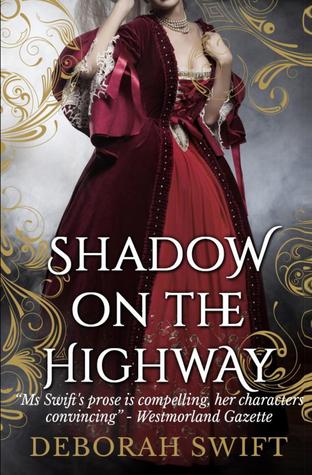
by Deborah Swift
When investigating mid-seventeenth century fashion, you might well be misled by portraits of the time. This is because there was a craze during the mid and late seventeenth century for women to be dressed (or rather undressed) in what appears to be a lot of drapery. The portrait below of Moll Davis exemplifies this kind of look.
Mid-seventeenth century court etiquette demanded that only someone of a superior rank could receive a person of lower rank when in a state of undress. However, a person of inferior rank had to be formally attired, right down to hat and gloves, when attending a person of superior rank. Sitting for a portrait in a state of undress emphasized the fact that the sitter belonged to the upper classes, and soon the idea caught on, and everyone demanded these 'superior' portraits.
The drapery was often open at the front like a loose sleeveless coat, and was in fact known as a nightgown. It was worn over a chemise which was (to modern eyes) only just decent and showed the curve of the breasts. At the time a woman's neck and shoulders were considered extremely beautiful, and the clothing for portraits was designed to show off this décolleté neckline. It was fashionable to mimic the romantic clothing of fifty to seventy years earlier, very much as 'vintage' is fashionable today. Women wanted to look like the portraits of Van Dyck, with flowing curls and rich swathes of deep-hued fabric. In wealthy circles, satin was the most popular fabric, followed by velvet and textured brocade.
From the 1650's over-skirts began to be parted to reveal decorative petticoats. A mantua was where the over-skirt was hitched up at the front and sides to reveal an embroidered or fancy petticoat, a fashion which persisted into the 18th century. The outer part was often worn very long to form a train. This is an example (from the Met Museum) which must be for winter wear, as it is of a heavier and more durable fabric. Click on the picture for more information.

Poorer women might wear gowns made of wool or cotton with much simpler tailoring. A rich woman's bodice might be seamed together with dozen different panels to fit perfectly, but a poor woman's was often less shapely and designed to be handed on to other members of the family to get maximum wear.
 We have very few English portraits of women from the lower classes, but must rely on our Dutch and Flemish neighbours to show us what 17th century dress might have looked like. This picture by Gabriel Metsu shows a woman of servant class, and her skirt is of a much more practical length (no trailing train) and the skirts are protected by an apron. When writing novels set in the seventeenth century it is easy to take a simplistic view of what people wore, but the truth is immensely complex, and much more fascinating.
~~~~~~~~~~~~~
Thank you for reading! Find out more about me and my seventeenth century books by clicking the picture.
 Her characters are so real that they linger in the mind long after the book is back on the shelf - Historical Novel Review
When investigating mid-seventeenth century fashion, you might well be misled by portraits of the time. This is because there was a craze during the mid and late seventeenth century for women to be dressed (or rather undressed) in what appears to be a lot of drapery. The portrait below of Moll Davis exemplifies this kind of look.
 |
| Moll (Mary) Davis by Peter Lely (wiki) |
Mid-seventeenth century court etiquette demanded that only someone of a superior rank could receive a person of lower rank when in a state of undress. However, a person of inferior rank had to be formally attired, right down to hat and gloves, when attending a person of superior rank. Sitting for a portrait in a state of undress emphasized the fact that the sitter belonged to the upper classes, and soon the idea caught on, and everyone demanded these 'superior' portraits.
 |
| Barbara Castlemaine, Royal Mistress |
The drapery was often open at the front like a loose sleeveless coat, and was in fact known as a nightgown. It was worn over a chemise which was (to modern eyes) only just decent and showed the curve of the breasts. At the time a woman's neck and shoulders were considered extremely beautiful, and the clothing for portraits was designed to show off this décolleté neckline. It was fashionable to mimic the romantic clothing of fifty to seventy years earlier, very much as 'vintage' is fashionable today. Women wanted to look like the portraits of Van Dyck, with flowing curls and rich swathes of deep-hued fabric. In wealthy circles, satin was the most popular fabric, followed by velvet and textured brocade.
When not sitting for a portrait, the wealthy woman's dress was much more fussy. France was a large influence on fashion and the flamboyant Louis XIV (1638–1715) and his palace at Versailles became the leading fashion influence of the century. The French led the production of silk, lace, (known as point) and brocade. Londoners imported French wares, along with the French taste for excessive embellishment with ribbons, bows, buttons and embroidery. Italian lace and ribbon was also popular.
 |
| Anna Maria Louise von Medici |
From the 1650's over-skirts began to be parted to reveal decorative petticoats. A mantua was where the over-skirt was hitched up at the front and sides to reveal an embroidered or fancy petticoat, a fashion which persisted into the 18th century. The outer part was often worn very long to form a train. This is an example (from the Met Museum) which must be for winter wear, as it is of a heavier and more durable fabric. Click on the picture for more information.
Poorer women might wear gowns made of wool or cotton with much simpler tailoring. A rich woman's bodice might be seamed together with dozen different panels to fit perfectly, but a poor woman's was often less shapely and designed to be handed on to other members of the family to get maximum wear.
We have very few English portraits of women from the lower classes, but must rely on our Dutch and Flemish neighbours to show us what 17th century dress might have looked like. This picture by Gabriel Metsu shows a woman of servant class, and her skirt is of a much more practical length (no trailing train) and the skirts are protected by an apron. When writing novels set in the seventeenth century it is easy to take a simplistic view of what people wore, but the truth is immensely complex, and much more fascinating.Thank you for reading! Find out more about me and my seventeenth century books by clicking the picture.
Her characters are so real that they linger in the mind long after the book is back on the shelf - Historical Novel Review